Yamahai Sake: What It Is, Brewing Process, Kimoto Differences, and Top Brands Explained
Yamahai is a traditional sake brewing method from the Meiji era. Though labor-intensive, its complex flavor, unique umami, and acidity are cherished by sake enthusiasts.

よつば
May 19, 2026
Have you ever seen the terms "Yamahai" (山廃) or "Yamahai-jikomi" (山廃仕込み) on a sake label? Yamahai is a traditional Japanese sake brewing method established during the Meiji era, while most modern sake is made using a different process. Although it is labor-intensive, its complex flavor, characterized by unique umami and acidity, is strongly supported by sake enthusiasts. This article will provide a detailed explanation of Yamahai, from its definition and brewing method to its differences from Kimoto (生酛) and Sokujo (速醸), representative brands, and how to enjoy it.
What is Yamahai? | The Official Name of Yamahai-jikomi
 Photo by
 Yamahai (山廃) is an abbreviation for "Yamaoroshi Haishi Moto" (山卸廃止酛), and it is one of the methods for making Japanese sake (shubo-zukuri, or sake starter production). Developed in 1909 (Meiji 42) at the National Brewing Experiment Station, it is a traditional Kimoto (生酛) brewing method that eliminated the most labor-intensive step called "Yamaoroshi" (山卸).
History of Yamahai
In Kimoto-zukuri, the process of making the sake starter (shubo) involves a task called "Yamaoroshi" (山卸), where steamed rice and koji mold are mashed with a pole called a kai (櫂). This was a heavy labor, repeated many times from late night to early morning during the cold season, placing a significant burden on the kurabito (brewery workers).
In 1909, Dr. Kinichiro Kagi and his colleagues at the National Brewing Experiment Station discovered that "eliminating Yamaoroshi did not significantly affect sake quality." It was found that the enzymes in koji could saccharify the starch in rice, making it possible to omit the Yamaoroshi step. This led to the birth of "Yamaoroshi Haishi Moto," or Yamahai.
Characteristics of Yamahai Brewing
Yamahai only eliminated Yamaoroshi, but it inherited other traditional Kimoto-style processes. In particular, the "lactic acid fermentation" (乳酸発酵) process, which incorporates naturally occurring lactic acid bacteria to suppress the growth of unwanted microorganisms, is common to both Yamahai and Kimoto. This long fermentation process gives birth to Yamahai's unique complex flavor.
Differences Between Yamahai and Other Shubo-zukuri Methods
 Photo by
 As a classification of Japanese sake, in addition to Yamahai, shubo-zukuri (sake starter production) includes the Kimoto and Sokujo methods. Let's clarify the differences between them.
Differences Between Yamahai and Kimoto
Kimoto is the most traditional shubo-zukuri method and is the prototype for Yamahai. The only difference between the two is the presence or absence of Yamaoroshi; other steps are almost identical.
| Comparison Item | Yamahai | Kimoto |
|---|---|---|
| Yamaoroshi | None | Present |
| Lactic acid supply | Naturally occurring lactic acid bacteria | Naturally occurring lactic acid bacteria |
| Production period | Approx. 4 weeks | Approx. 4 weeks |
| Labor | High | Very high |
| Flavor profile | Complex, rich, acidic | More complex, deeper |
Since Yamahai is a method derived from Kimoto, their flavor profiles are very similar.
Differences Between Yamahai and Sokujo
Sokujo (速醸) is the modern mainstream brewing method developed after the Meiji era, significantly shortening the traditional Kimoto and Yamahai methods.
| Comparison Item | Yamahai | Sokujo |
|---|---|---|
| Lactic acid supply | Naturally occurring lactic acid bacteria | Direct addition of brewing lactic acid |
| Production period | Approx. 4 weeks | Approx. 2 weeks |
| Labor | High | Low |
| Flavor profile | Complex, rich, acidic | Light, clear |
With Sokujo, pre-made lactic acid is directly added to the shubo (sake starter), which reduces the risk of contamination by unwanted bacteria and shortens the brewing process. Most Japanese sake on the market is made using the Sokujo method.
Flavor Characteristics of Yamahai Sake
 Photo by Matthew Jesús on Pexels
Sake made with the Yamahai-zukuri method has a unique character that cannot be achieved with Sokujo.
Richness and Strong Umami
The diverse amino acids and peptides produced during the long fermentation process are the source of Yamahai sake's richness and umami. You can enjoy a deep rice umami and a firm body.
Rich Acidity
Another characteristic of Yamahai is its refreshing and complex acidity, born from fermentation by natural lactic acid bacteria. While sake's acidity might be unfamiliar to some, it has a similar impression to wine's acidity, broadening its compatibility with food.
Shines When Served Warm (Kanzake)
Yamahai sake truly shines when served warm as Kanzake (燗酒). When warmed to 40-50 degrees Celsius, from Nurukan (lukewarm sake) to Atsukan (hot sake), the richness, umami, and acidity spread in an exquisite balance, deepening the rice-derived flavors even further.
Distinctive Aroma
Yamahai has a distinctive aroma, sometimes described as "lactic acid aroma," "yogurt aroma," or "cheese-like flavor." It is cherished by sake enthusiasts as a coveted individuality and exhibits unique charm when paired with food.
Representative Yamahai Brands
 Photo by ZhiCheng Zhang on Pexels
Here are some sake breweries (蔵元) and brands known for their Yamahai-zukuri.
Daihichi Shuzo (Fukushima Prefecture) | Kimoto and Yamahai Master
Daihichi Shuzo (大七酒造) in Fukushima Prefecture is a rare sake brewery that produces all its Japanese sake using Kimoto-kei (Kimoto and Yamahai) methods. "Daihichi Junmai Kimoto" and "Daihichi Myokarakkyoku" are representative brands, offering complex and deep flavors.
Kikuhime (Ishikawa Prefecture) | A Pioneer of Yamahai
Kikuhime Goshi Kaisha (菊姫合資会社) in Ishikawa Prefecture is a sake brewery known as a leading exponent of Yamahai-zukuri. "Kikuhime Yamahai Junmai" and "Kikuhime Tsurunosato" are famous brands, receiving strong support from Kanzake enthusiasts.
Kubota Hekiju (Asahi Shuzo) | Niigata's Yamahai Junmai Daiginjo
"Kubota Hekiju," produced by Asahi Shuzo (朝日酒造) in Niigata Prefecture, is a Junmai Daiginjo-shu (純米大吟醸酒) made with the Yamahai-jikomi method. It's a unique sake that combines the light and dry (Tanrei Karakuchi) style of Niigata sake with the richness of Yamahai.
Tengumai (Shata Shuzo) | A Yamahai Junmai Masterpiece
"Tengumai Yamahai-jikomi Junmai-shu," produced by Shata Shuzo (車多酒造) in Ishikawa Prefecture, is widely known as a prime example of Yamahai sake. It is characterized by its goldenrod color and rich, deep flavor.
Kokuryu (Kokuryu Shuzo) | Fukui's Yamahai
Kokuryu Shuzo (黒龍酒造) in Fukui Prefecture is also known for some of its Yamahai-zukuri products. It is a popular brand where the complex flavor of the Yamahai style merges with the elegance of the Kokuryu brand.
Shinkame (Shinkame Shuzo) | Saitama's Kanzake Master
Shinkame Shuzo (神亀酒造) in Saitama Prefecture is known as a sake brewery specializing in Kanzake, and it also produces Yamahai-zukuri products. It is a brewery that receives tremendous support from Kanzake enthusiasts.
How to Choose Yamahai Sake
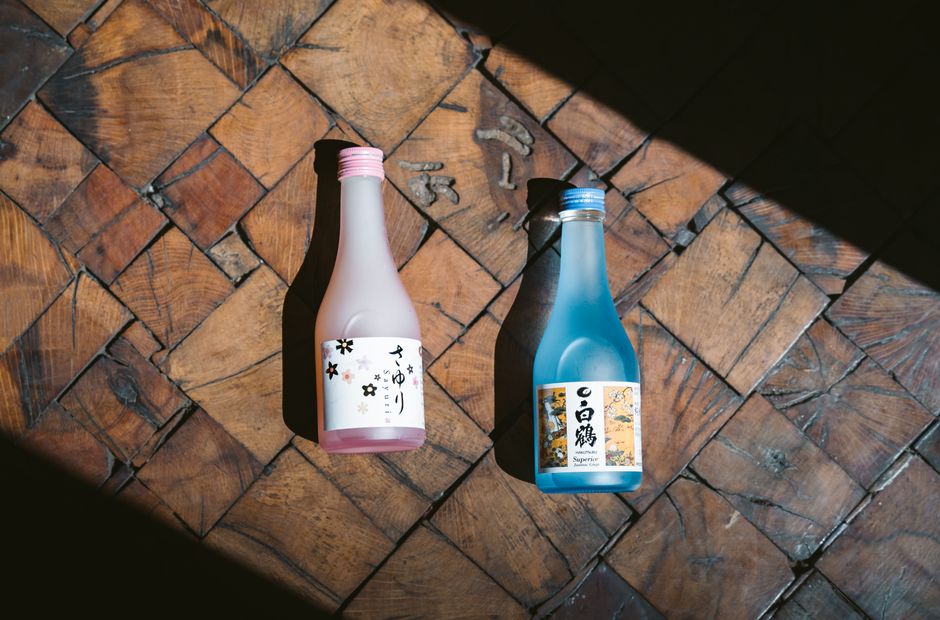 Photo by Miguel González on Pexels
Here are some tips for choosing Yamahai if you're trying it for the first time.
Choose by Brand
For beginners, it's recommended to start with classic brands like "Tengumai Yamahai-jikomi Junmai-shu" or "Kikuhime Yamahai Junmai." They are affordable, typically ranging from 1,500 to 2,500 yen for a shigobin (四合瓶, 720ml bottle), and offer flavors that make it easy to understand the characteristics of Yamahai.
Differences Between Junmai Yamahai and Yamahai Honjozo
"Junmai Yamahai" (純米山廃) is Yamahai sake made only from rice, rice koji, and water, while "Yamahai Honjozo" (山廃本醸造) is a type with added brewer's alcohol. If you want to enjoy the maximum rice-derived umami, choose Junmai Yamahai; if you prefer a cleaner finish, Yamahai Honjozo would be a good choice.
Choose by Region
The main regions famous for Yamahai-zukuri are Hokuriku and Tohoku. Many sake breweries in cold regions, such as Ishikawa Prefecture (Kikuhime, Tengumai), Fukushima Prefecture (Daihichi), Niigata Prefecture (Hekiju), and Fukui Prefecture (Kokuryu), specialize in this method.
Recommended Ways to Drink Yamahai Sake
 Photo by
 Here are ways to maximize the appeal of Yamahai sake.
Enjoy as Kanzake (Warm Sake)
Yamahai is a sake that truly shines when enjoyed as Kanzake. Varying the temperature from Nurukan (ぬる燗, lukewarm, 40°C) to Jokan (上燗, warm, 45°C) to Atsukan (熱燗, hot, 50°C) reveals different expressions. It's the perfect way to enjoy sake on a cold evening.
Savor at Room Temperature
You can also enjoy Yamahai's umami and richness at room temperature (15-20°C). Sipping it slowly in a wine glass allows you to fully appreciate its unique complex aroma.
Cold Sake is Not Recommended
When Yamahai is consumed as reishu (冷酒, cold sake), its richness and umami tend to be less noticeable. If you're looking for freshness, choose another type of sake; Yamahai is generally best enjoyed at room temperature or as Kanzake.
Dishes That Pair Well with Yamahai Sake
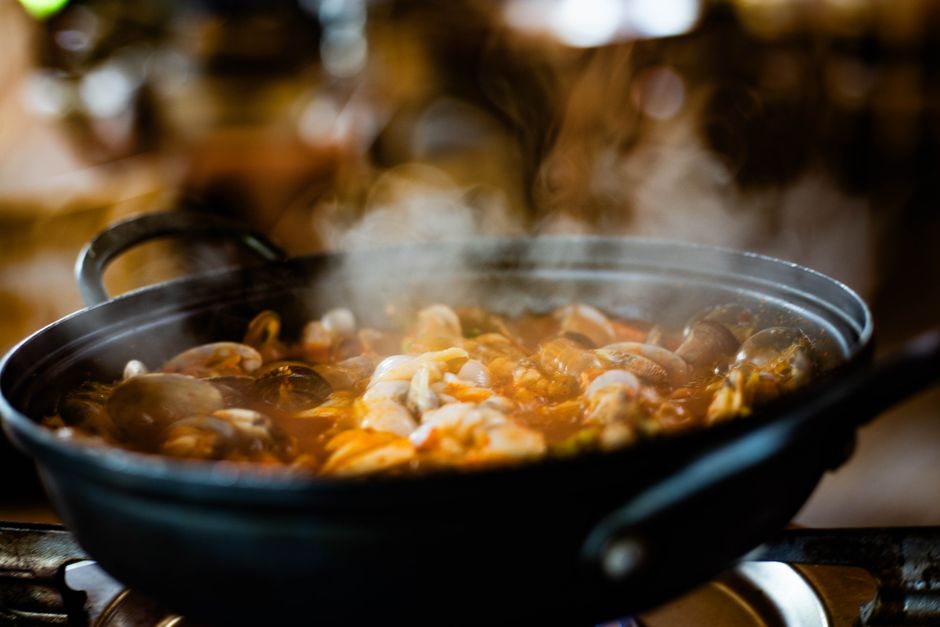 Photo by studio sol on Pexels
Yamahai's complex flavor pairs exceptionally well with hearty dishes.
When combined with rich and umami-laden dishes such as stews (Oden, Motsuni, Nikujaga), grilled foods (Yakitori, steak), miso-based dishes, and fermented foods (cheese, prosciutto, kimchi), their individual characteristics are enhanced.
Its compatibility with winter hot pot dishes is particularly exceptional, and the combination of warm food and warm Yamahai sake (Kanzake) can be considered a staple of the Japanese winter dining table.
Summary
 Photo by
 Yamahai is an abbreviation for "Yamaoroshi Haishi Moto" (山卸廃止酛), a traditional Japanese sake shubo-zukuri (sake starter production) method developed in 1909 (Meiji 42). While it omits the most labor-intensive Yamaoroshi (山卸) step from the Kimoto (生酛) method, it retains the fermentation process utilizing natural lactic acid bacteria, resulting in sake with complex, deep richness and abundant acidity.
In modern times, where Sokujo is the mainstream, the labor-intensive Yamahai-zukuri method is a minority, but renowned sake breweries specializing in Yamahai-zukuri, such as Daihichi, Kikuhime, Tengumai, Hekiju, and Shinkame, are scattered throughout Japan. Yamahai, which truly shines when served as Kanzake, pairs wonderfully with rich dishes, so be sure to enjoy it on a cold evening.
Frequently Asked Questions
Q日本酒の「山廃」とはどのような製法ですか?
山廃とは「山卸廃止酛」を略した日本酒の酒母造りの製法です。明治42年に国立醸造試験所で開発され、伝統的な生酛造りから、米と麹を櫂でつぶす重労働「山卸」の工程を廃止したものです。自然界の乳酸菌を取り込む生酛系の特徴を受け継ぎ、複雑な旨味と酸味を持つ日本酒が生まれます。
Q山廃と生酛の日本酒造りにおける違いは何ですか?
山廃と生酛は、どちらも自然界の乳酸菌を利用する伝統的な酒母造りですが、最も大きな違いは「山卸の有無」です。生酛は米と麹を櫂でつぶす「山卸」を行うのに対し、山廃はこの重労働を廃止した製法です。それ以外の乳酸菌の供給源や製造期間はほぼ同じで、味わいの傾向も似ています。
Q山廃と速醸の日本酒造りの製法にはどのような違いがありますか?
山廃は自然界の乳酸菌を取り込み約4週間かけて酒母を造る伝統製法で、複雑なコクと酸味が特徴です。一方、速醸は醸造用乳酸を直接添加するため、約2週間と短期間で酒母が完成し、軽快でクリアな味わいになります。速醸は現代の日本酒造りの主流であり、手間も少ないです。
Q山廃仕込みの日本酒はどのような味わいが特徴的ですか?
山廃仕込みの日本酒は、長期間の発酵で生まれる多彩なアミノ酸による「コクと旨味の強さ」が特徴です。また、自然の乳酸菌由来の「豊かな酸味」があり、ワインのような印象も与えます。さらに、「乳酸香」や「ヨーグルト香」と表現される個性的な香りも持ち、燗酒にするとその魅力が最大限に引き出されます。


