What is a Toji? A Complete Guide to Japan's Master Sake Brewers: Pronunciation, Job Description, Schools, and How to Become One
Ever wondered about the "Toji" you see on sake labels? They're the master brewers, whose skill defines your sake's taste. Learn their role, history, and more here.
よつば
August 16, 2026
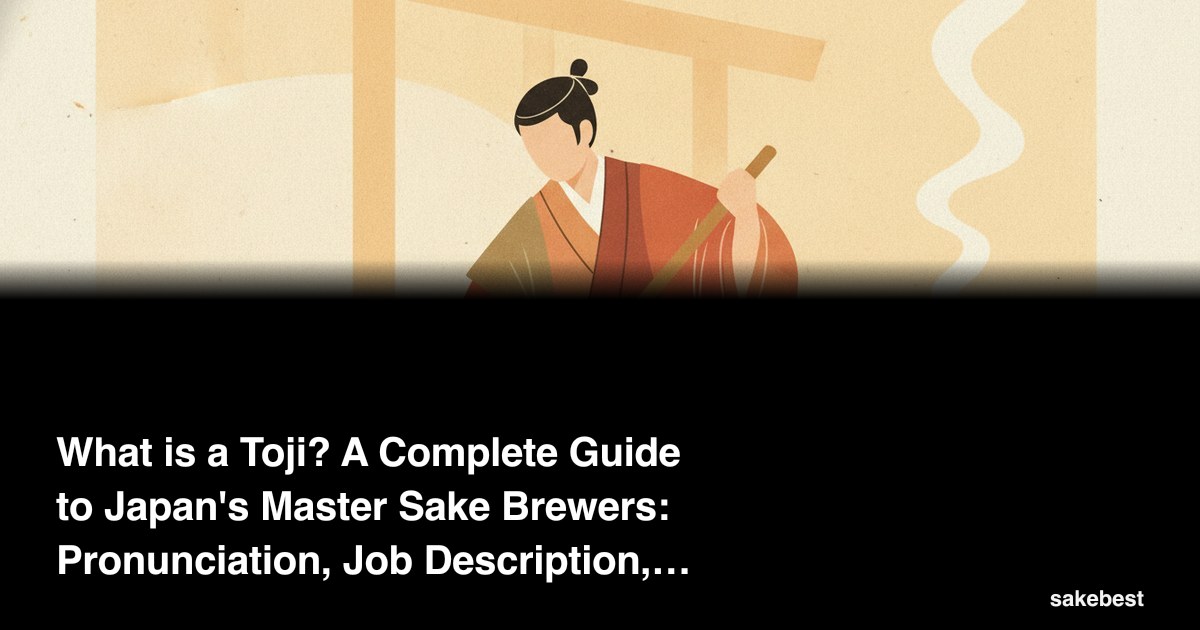
The term "Toji (杜氏)" is often seen on sake labels and in brewery owner introductions. Many may not know how to read it or what their specific job entails. A Toji is the chief brewer who oversees the entire sake brewing process, and the taste of sake can change significantly depending on their skill. This article will explain in detail how to read "Toji," their role, historical schools, and the path to becoming a Toji.
What is a Toji? Reading and Role
A Toji is pronounced "toh-jee" and refers to the chief brewer who directs all stages of sake brewing at a sake brewery (酒蔵). They oversee every process that influences the quality of sake, from rice steaming and koji (麹) making to shubo (酒母) making and moromi (もろみ) fermentation management, leading the sake brewing artisans known as kurabito (蔵人).
Their role differs from that of the brewery owner (蔵元), who handles the business management, while the Toji is solely responsible for the technical aspects of sake brewing. It is said that even within the same sake brewery, if the Toji changes, the sake's characteristics will change, demonstrating how directly a Toji's skill and experience impact the taste of sake.
History and Schools of Toji (Toji Groups)
The origin of Toji is said to date back to when farmers would go to sake breweries during the winter off-season to work and hone their sake brewing skills. Toji from various regions formed "Toji groups" (杜氏集団) to share techniques and customs, developing their unique schools of brewing.
Representative Toji groups include the following three, also known as the Three Great Toji of Japan.
- Nanbu Toji (Iwate Prefecture): The largest Toji group nationwide, known for their meticulous and precise work.
- Echigo Toji (Niigata Prefecture): Renowned for their delicate techniques that produce tanrei karakuchi (light and dry) sake, they have supported Niigata's sake characteristics.
- Tanba Toji (Hyogo Prefecture): A historic Toji group that supported sake brewing in Nada, Hyogo.
In addition to these, unique Toji groups exist in various regions, such as Noto Toji (Ishikawa Prefecture) and Hiroshima Toji, who have passed down sake brewing techniques tailored to their local climate, rice, and water. The distinct characteristics of sake from different regions, as seen in Niigata Sake | Explaining Famous Light and Dry Sakes, Popular Brands, and How to Choose, have also been fostered by the skills of these Toji.
Main Responsibilities of a Toji
A Toji's work is diverse, primarily centered around the winter sake brewing season.
- Rice Selection and Polishing Management: Assessing the condition of the sake rice to be used and determining the rice polishing ratio.
- Koji Making: Managing the process of cultivating koji mold on steamed rice, which can be called the heart of sake brewing.
- Shubo Making: Culturing a large amount of yeast and preparing the shubo, which forms the foundation for moromi fermentation.
- Moromi Fermentation Management: Daily checking the temperature and condition of the moromi and finely adjusting the progress of fermentation.
- Guidance and Leadership of Kurabito: Assigning tasks to multiple kurabito and advancing sake brewing as a team.
The series of steps—steaming rice, making koji, preparing shubo, and fermenting moromi—are explained in detail in How to Make Sake | A Complete Guide Explaining 10 Steps by a Professional, but it is the Toji's role to make the final decisions at each of these stages.
In recent years, many Toji are committed to labor-intensive traditional methods like Yamahai (山廃) and Kimoto (生酛). Unique sake characteristics, such as those explained in What is Yamahai? | Thorough Explanation of Production Features, Differences from Kimoto, and Representative Brands, are born from the Toji's judgment and dedication.
How to Become a Toji
There is no specific qualification exam to become a Toji. Generally, the main path involves entering a sake brewery as a kurabito and honing skills through several to more than ten years of practical experience. In some cases, obtaining a "Toji license" certified by organizations like the Japan Sake Brewers Toji Association allows one to officially be called a Toji.
Recently, there has been an increase in cases where individuals study brewing science at universities or specialized institutions for sake brewing technology before joining a sake brewery, or transition from other industries to start their careers as kurabito. Furthermore, while the world of Toji was once predominantly male, many female Toji are now active, and their sake brewing, utilizing new sensibilities, is attracting attention.
Challenges and Changes in the Toji System
In the past, Toji often worked as seasonal laborers, primarily at sake breweries during the off-season for farming, leading a dual life of farming in summer and sake brewing in winter. However, in recent years, "employee Toji (社員杜氏)"—brewery staff who work year-round, inherit brewing techniques, and become Toji—are becoming the mainstream.
The background to this change includes the aging of traditional Toji groups and a shortage of successors. Toji groups that once boasted hundreds of members are seeing a decline in young talent, and there's an increase in "Kuramoto Toji (蔵元杜氏)," where the brewery owner also serves as the Toji. On the other hand, more breweries are scientifically digitizing brewing techniques to enable younger brewers to consistently reproduce stable sake characteristics, showing that the way Toji skills are passed down continues to evolve with the times.
The Relationship Between Toji and Sake Flavor
Even when using the same sake brewery and the same sake rice, the taste of sake can change if the Toji is replaced. This is because "intuition" and "experience," which cannot be fully expressed by numerical data alone, such as in koji making or moromi fermentation temperature management, significantly influence the sake's characteristics.
For this reason, it's not uncommon for sake enthusiasts to become fans not only of the brewery owner but also of individual Toji, saying things like, "I'll buy this sake because this Toji made it." If you find a brand with the Toji's name listed on the label or back label, comparing it with sake from other years by the same Toji is one way to appreciate the depth of Japanese sake.
Good to Know! Q&A about Toji
Q1: What is the difference between a Toji and a Kurabito?
A Toji is the chief brewer who oversees the sake brewing process, while a kurabito is an artisan who performs the actual work under the Toji's instructions. Among kurabito, there are specialized titles for different roles, such as "Koji-ya" (koji maker) and "Moto-ya" (shubo maker). Gaining experience in these roles is the general path to becoming a Toji.
Q2: Are female Toji rare?
While there was a time when sake brewing sites were considered off-limits to women, this custom has largely disappeared today, and female Toji are active nationwide. The presence of female Toji, whose strength lies in their meticulous and detailed management, is bringing a fresh perspective to the sake industry.
Summary
A Toji is the technical chief brewer of a sake brewery, directing all stages of sake brewing. Toji groups from various regions, including Nanbu Toji, Echigo Toji, and Tanba Toji, have supported the unique and rich flavors of sake specific to their areas. If you come across a sake with a Toji's name on the label or in the brewery owner's introduction, reflecting on the skill and experience poured into that bottle will surely deepen your enjoyment of Japanese sake.


