Sake (Seishu): Your Comprehensive Guide to Distinguishing It from Nihonshu & Cooking Sake, Plus Varieties & How to Enjoy
Choosing sake? Ever wonder about terms like "Seishu," "Nihonshu," or "Ryorishu"? While "Nihonshu" is common, "Seishu" on labels often raises questions. We'll explain.

よつば
May 2, 2026
What is Seishu? A Comprehensive Guide to its Differences from Nihonshu and Cooking Sake, Plus Types and Delicious Ways to Enjoy It
When choosing sake at a supermarket or liquor store, have you ever been confused by the different labels like "Seishu (清酒)," "Nihonshu (日本酒)," "Ryōrishu (料理酒)," and "Gōsei Seishu (合成清酒)"? Since "Nihonshu" is the commonly used term in daily life, many people likely wonder, "How is Seishu different?" when they see it on a label. This article will clearly explain the distinct differences between Seishu and Nihonshu based on the legal definitions set by the National Tax Agency, how to distinguish them from Ryōrishu and Gōsei Seishu, and the characteristics of each type, such as Junmai (純米酒) and Ginjo (吟醸酒) sake. By gaining this fundamental knowledge, you'll be able to decipher the brewer's dedication hidden on the labels and confidently choose "the perfect bottle" for your daily evening drink or for pairing with meals.
Basic Definition and Fundamental Knowledge of Seishu
The first step to understanding Seishu is to grasp its institutional definition based on the Liquor Tax Act, rather than just a general impression. While we often vaguely perceive Seishu as referring to Japanese alcoholic beverages in general, its ingredients and production methods are actually clearly defined. Let's start by confirming the basics of what Seishu is.
What is the Definition of Seishu?
Seishu is an alcoholic beverage precisely defined by law. According to the National Tax Agency, under the Liquor Tax Act, Seishu refers to a product made by fermenting rice, rice koji (米こうじ), and water as primary ingredients, and then filtering it. Additionally, products that use brewer's alcohol (醸造アルコール) within specified limits, in addition to rice, rice koji, and water, are also treated as Seishu. Furthermore, according to the National Tax Agency, Nihonshu is a type of Seishu that meets additional conditions, such as using domestically produced rice and being manufactured in Japan (nta.go.jp).
What's important here is that not just any rice-derived alcoholic beverage qualifies as Seishu. It must include a filtering process after fermentation and meet the ingredient and production method requirements of the Liquor Tax Act. Products like Doburoku (どぶろく), which differ in their filtering process and institutional treatment, are not the same even if they use the same rice.
Furthermore, while Seishu has a long history as a traditional Japanese brewed alcoholic beverage, quality labeling rules are also well-established in the current market. The National Tax Agency's Standards for Manufacturing Methods and Quality Labeling of Seishu define the conditions under which special designations (特定名称) like Ginjo, Junmai, and Honjozo (本醸造酒) can be displayed, allowing consumers to glean certain information from the labels. According to the National Tax Agency, these standards have been in effect since April 1990 and serve as a guide for product selection (nta.go.jp).
In short, Seishu is not merely an old, ambiguous term, but an alcoholic beverage whose ingredients, production methods, and labeling principles have all been institutionalized. Understanding this premise makes it easier to clarify the differences between Seishu, Nihonshu, and Ryōrishu.
Pronunciation and Alcohol Content of Seishu
Seishu is pronounced "say-shoo." While it is often referred to as Nihonshu in conversation, the term Seishu is used in institutional and industry contexts.
Alcohol content varies by product, but a general guideline for typical Seishu is around 15%. According to research by the National Research Institute of Brewing (NRIB), the average alcohol content of Nihonshu is approximately 15% (nrib.go.jp). Genshu (原酒), or undiluted sake, can have a higher alcohol content, while products that have undergone dilution (加水調整) are adjusted to a more drinkable level.
While Seishu often doesn't have a strict best-before date, its quality changes depending on storage conditions. According to the National Research Institute of Brewing (NRIB), it is recommended to store Seishu in a cool, dark place and consume it as soon as possible after opening (nrib.go.jp). Especially for products like Namazake (生酒), which require refrigeration, temperature management significantly impacts the taste.
Differences Between Seishu and Nihonshu
Seishu and Nihonshu are often thought to be synonymous, but strictly speaking, their relationship is one of overlapping categories. With the current Geographical Indication (GI) system (地理的表示制度) in place, the conditions for labeling a product as Nihonshu are clearer than before. Here, we will clarify the definition of Nihonshu and its relationship with Seishu.
Definition of Nihonshu and the Geographical Indication System
Nihonshu is not simply a "Japanese-style" alcoholic beverage. According to the National Tax Agency's production standards for the Geographical Indication "Nihonshu," a product can only be labeled as Nihonshu if it meets the requirements for Seishu, uses domestically produced rice, and is manufactured in Japan. The National Tax Agency states that this name is protected as a Geographical Indication (nta.go.jp).
A Geographical Indication (GI) is a system designed to protect the unique characteristics and reputation associated with a particular region. Similar to the origin labeling for wine and cheese, Nihonshu also has conditions imposed on the origin of its ingredients and its place of manufacture. According to the National Tax Agency's explanation, GI (Geographical Indication) is structured as a mechanism to protect characteristics derived from a specific region of origin (nta.go.jp).
Due to this system, sake-like beverages produced overseas, or domestically manufactured products using foreign-produced rice, may not be labeled as Nihonshu, even if they potentially meet the definition of Seishu. The term Nihonshu is now not only a cultural common name but also a legally protected designation.
The Decisive Difference Between Seishu and Nihonshu
To summarize the difference in a single phrase: Seishu is a classification name under the Liquor Tax Act, while Nihonshu is a subset of Seishu that meets additional conditions. In other words, Seishu is a broader category, and Nihonshu falls within a part of it. To clarify, the relationship can be organized as follows:
Item | Seishu | Nihonshu |
Basic Status | Alcoholic beverage classification under the Liquor Tax Act | A specific designation for Seishu that meets additional conditions |
Main Conditions | Ingredients and production methods comply with legal standards | Must be Seishu, use domestically produced rice, and be manufactured in Japan |
Basis for Labeling | Liquor Tax Act, etc. | Geographical Indication "Nihonshu" |
Knowing this difference helps you understand that Seishu and Nihonshu are not entirely separate entities but rather have an inclusive relationship. While they are often used almost synonymously in everyday conversation, their meanings diverge in product labeling and institutional explanations, making an accurate understanding valuable.
Differences Between Seishu and Ryōrishu (Cooking Sake) or Gōsei Seishu (Synthetic Sake)
At supermarkets, Ryōrishu and Gōsei Seishu are sometimes displayed near Seishu. Although they may look similar, their purpose, contents, and legal treatment are not the same. Here, we will look at the differences between Seishu and these two products, which are particularly easy to confuse in a household setting.
Differences from Ryōrishu (Cooking Sake)
Ryōrishu (料理酒) is a product adjusted for ease of use in cooking. Unlike drinking Seishu, many Ryōrishu products have added salt (食塩) or other ingredients, making them unsuitable for drinking as is. Indeed, many fermented seasonings (発酵調味料) and mirin-type seasonings (みりんタイプ調味料) on the market contain salt in their ingredient lists.
On the other hand, not all sake used for cooking contains salt. Some sake brewing manufacturers (酒造メーカー) sell cooking Seishu (料理用清酒) that is specifically designed for culinary purposes without added salt. Therefore, when you see the term "Ryōrishu," it's important not to assume they are all the same; instead, check whether it's an alcoholic beverage or a seasoning, and if salt is listed in the ingredients.
Differences from Gōsei Seishu (Synthetic Sake)
Gōsei Seishu (合成清酒) differs in its production method from authentic Seishu, which is made by fermenting rice. Gōsei Seishu is an alcoholic beverage created by adding sugars (糖類), acidulants (酸味料), amino acids (アミノ酸), and other ingredients to an alcohol base to achieve a flavor similar to Seishu. According to the standard analytical methods of the National Research Institute of Brewing (NRIB), Gōsei Seishu is treated as a distinctly separate category from Seishu (nrib.go.jp).
The major difference is that while Seishu develops its aroma and flavor through fermentation, Gōsei Seishu creates its taste through ingredient design (成分設計). Consequently, there are differences in price range, usage, and flavor profiles. Historically, there were times when it was popular as an everyday sake (日常酒), but in current sake selection, it's important to check the label to confirm whether it is Seishu or Gōsei Seishu.
Representative Types of Seishu
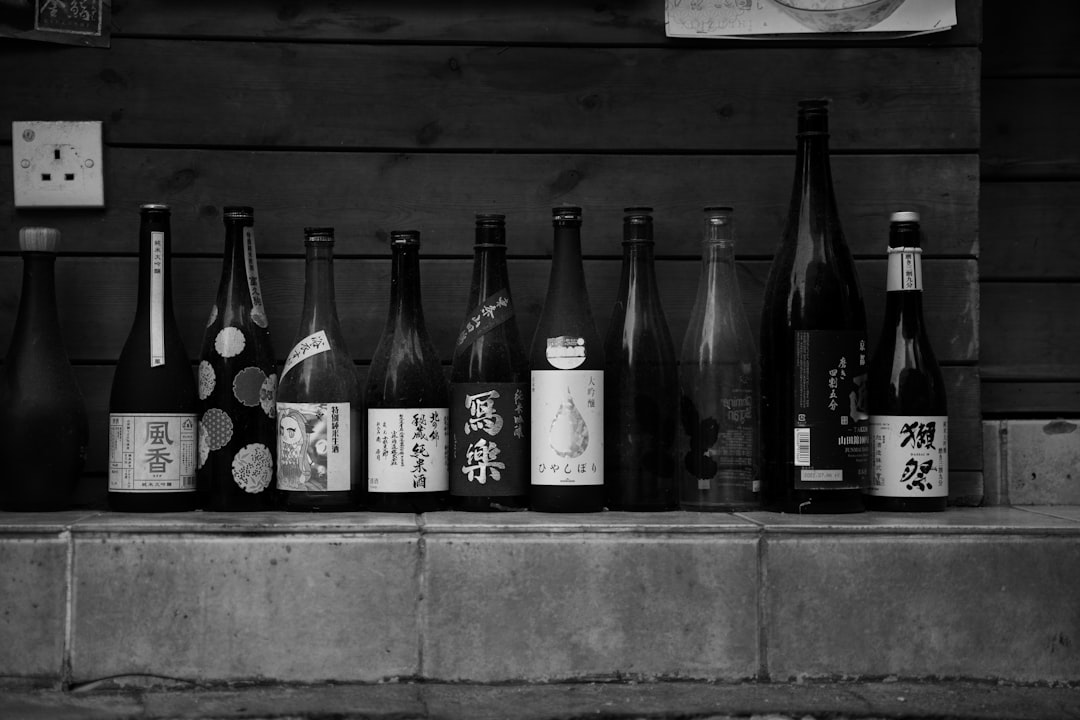
There are many brands of Seishu, but understanding the broad classifications makes it easier to choose. The basics are special designation sake (特定名称酒) and ordinary sake (普通酒). Special designation sake is classified based on ingredients, rice polishing ratio (精米歩合), and other factors, while ordinary sake refers to all other types of Seishu. Let's look at the characteristics of each.
Special Designation Sake
Special designation sake refers to Seishu that meets the conditions stipulated in the National Tax Agency's Standards for Manufacturing Methods and Quality Labeling of Seishu. Broadly, it is categorized into Ginjo-type, Junmai-type, and Honjozo-type, organized by ingredients, rice polishing ratio, and flavor profile. According to the National Tax Agency, special designation Seishu refers to Ginjo, Junmai, and Honjozo sakes, each with specific requirements (nta.go.jp).
The representative classifications are summarized as follows:
Type | Ingredients | Rice Polishing Ratio | Characteristics |
Junmai Sake | Rice, rice koji, water | No specific requirement | Easy to perceive the umami and richness of rice |
Ginjo Sake | Rice, rice koji, water, brewer's alcohol | 60% or less | Has a fragrant aroma and light crispness |
Daiginjo Sake | Rice, rice koji, water, brewer's alcohol | 50% or less | Delicate and elegant aroma |
Junmai Ginjo Sake | Rice, rice koji, water | 60% or less | Good balance of aroma and umami |
Junmai Daiginjo Sake | Rice, rice koji, water | 50% or less | Highly aromatic with a clear, transparent taste |
Honjozo Sake | Rice, rice koji, water, brewer's alcohol | 70% or less | Refreshing and suitable as a food-pairing sake |
Rice polishing ratio (精米歩合) is a numerical value indicating how much of the brown rice (玄米) grain remains after polishing. For example, a rice polishing ratio of 60% means that 40% of the rice has been polished away. Generally, the more the rice is polished, the less likely it is to produce off-flavors, resulting in a lighter and more refined impression. However, this process requires more effort and cost.
However, the quality of sake is not determined solely by the rice polishing ratio. A practical approach to choosing sake is to opt for Ginjo-type if you want to enjoy a fragrant aroma, Junmai-type if you prefer to savor the umami of rice, or Honjozo-type if you're looking for something that pairs well with everyday meals. Simply by looking at the special designation listed on the label, you can grasp the general profile of that sake.
Ordinary Sake
Ordinary sake (普通酒) is Seishu that does not meet the requirements for special designation sake. This does not mean it is of low quality. Many ordinary sakes are distributed at accessible price points and have long been popular as everyday evening drinks or as staples in restaurants.
Ordinary sake is characterized by a relatively wide range of brewery-specific designs, as it is not subject to the same limited labeling conditions regarding rice polishing ratio or ingredient composition as special designation sake. It encompasses a broad spectrum, from refreshing types to those with a strong umami flavor, and many brands are delicious when served warm (燗).
According to a notification from the National Tax Agency, guidelines are provided for labeling Seishu that does not fall under special designation sake, making it clear that it is ordinary sake (nta.go.jp). If you want to enjoy sake casually at your everyday dining table, ordinary sake is actually a strong option.
Delicious Ways to Enjoy Seishu

A major appeal of Seishu is how its impression changes with temperature. Even with the same brand, the perception of aroma and umami can vary significantly depending on whether it's chilled, served at room temperature, or warmed. Choosing the right temperature range to match your preference or the dish will greatly expand your enjoyment of Seishu.
Drinking Hiya (Room Temperature)
Hiya (冷や) generally refers to drinking sake at a temperature close to room temperature. Its appeal lies in being neither too cold nor too warm, making it relatively easy to grasp the balance of aroma, sweetness, acidity, and umami. Since the sake's inherent design comes through clearly, it's also suitable for trying a brand for the first time.
Especially with Junmai and Honjozo sakes, serving them as Hiya can make it easier to perceive the rice-derived fullness and cohesive aftertaste. Even simply allowing the sake to return to room temperature slightly after taking it out of the refrigerator, rather than drinking it immediately, can change its impression.
Drinking Reishu (Chilled Sake)
Reishu (冷酒) is a style of drinking sake well-chilled. It allows you to perceive the aroma clearly and offers a light mouthfeel, making it popular during hot weather or as an aperitif. This drinking style pairs particularly well with types like Ginjo and Junmai Ginjo, which are enjoyed for their fragrant aromas.
Chilling sake too much can sometimes make it harder to perceive its aroma and umami, so it's recommended to explore a temperature range where the aftertaste lingers a bit, rather than extremely low temperatures. Using a wine glass can help the aroma develop, making it easier to appreciate the charm of Ginjo-type sakes.
Drinking Kanshu (Warmed Sake)
Kanshu (燗酒) is a method of warming Seishu before drinking. As the temperature rises, the aroma opens up, and the sweetness and umami tend to expand. Especially with Junmai, ordinary, and Honjozo sakes, warming them often mellows the sharp edges of the taste, making them feel more compatible with meals.
According to the National Research Institute of Brewing (NRIB), the impression of Seishu's aroma and flavor changes significantly with temperature, so storage and serving temperatures directly affect how much it is enjoyed (nrib.go.jp). At home, warming it slowly in a hot water bath (湯せん) is less prone to failure and tends to result in a more balanced taste than using a microwave oven.
Kanshu pairs well with umami-rich Japanese dishes like grilled fish (焼き魚), simmered dishes (煮物), and hot pot dishes (鍋料理). Those who have only ever drunk chilled sake should especially try Kanshu at least once; they will likely experience the true depth of Seishu.
Frequently Asked Questions
Q清酒と日本酒の決定的な違いは何ですか?
清酒は酒税法に基づき、米、米こうじ、水を原料に発酵・ろ過した酒類全般を指します。一方、日本酒は清酒の定義を満たし、さらに国産米を使い日本国内で製造されたものに限定されます。つまり、清酒という広い分類の中に日本酒が含まれる関係です。日本酒は地理的表示制度で保護されています。
Q清酒とは、酒税法上どのように定義されていますか?
清酒は酒税法に基づき、米、米こうじ、水を主な原料として発酵させ、こした酒類です。規定量内で醸造アルコールなどを加える場合も清酒とされます。重要なのは、発酵後にろ過する工程と、酒税法が定める原料・製法の要件を満たすことです。
Q料理酒と飲用の清酒はどこが違いますか?
料理酒は料理用途に特化して調整されており、飲用の清酒とは異なります。多くの場合、食塩などが加えられているため、そのまま飲むのには適しません。ただし、一部には食塩無添加の料理用清酒もあります。購入の際は、原材料表示で食塩の有無を確認することが重要です。
Q清酒の特定名称酒にはどのような種類がありますか?
清酒の特定名称酒には、国税庁の基準で定められた「吟醸酒系」「純米酒系」「本醸造酒系」があります。これらは原料(米、米こうじ、水、醸造アルコール)、精米歩合、香味の傾向によって分類されます。例えば、純米酒は米の旨味、吟醸酒は華やかな香りが特徴です。


