Sake vs. Shochu: A Comprehensive Comparison of Production, Ingredients, Alcohol Content, and Calories
Sake and shochu are common drinks, but few know their true differences. Both are Japanese alcohols, yet vary in making, ingredients, and enjoyment.

よつば
May 2, 2026
Japanese sake (日本酒) and Shochu (焼酎) are commonly seen at izakaya (居酒屋) and other establishments, but surprisingly few people can accurately explain the differences between them. While both are traditional Japanese alcoholic beverages (和酒), they are entirely different types of alcohol in terms of production method, ingredients, and how they are consumed. This article will clearly explain the differences between Japanese sake and Shochu from the perspectives of production method, ingredients, alcohol content, calories, and drinking styles.
The Decisive Difference Between Japanese Sake and Shochu Lies in the Production Method
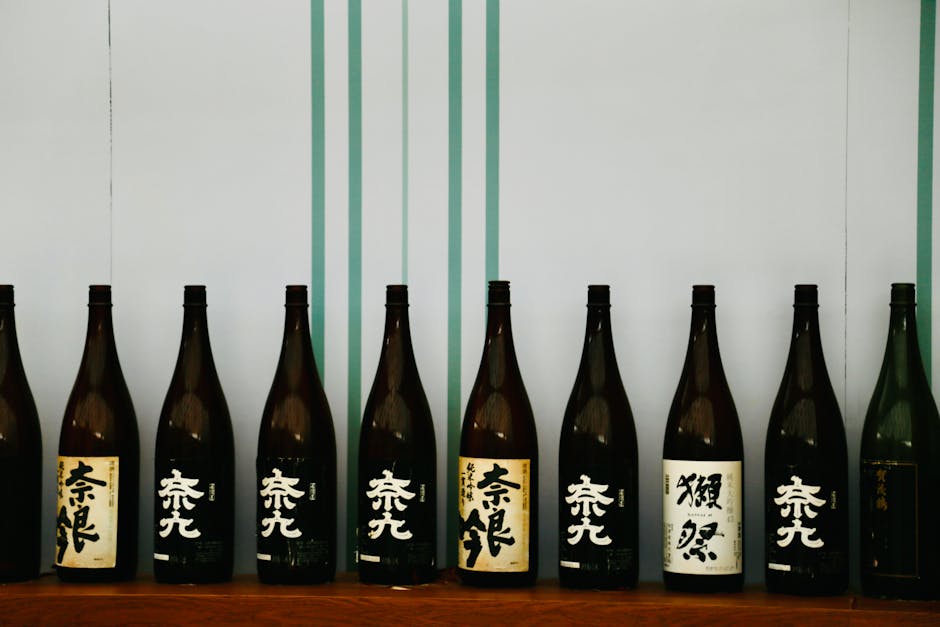 Photo by
 The biggest difference between Japanese sake and Shochu lies in their production methods. Japanese sake belongs to the entirely different category of "brewed liquor (醸造酒)," while Shochu is a "distilled liquor (蒸留酒)."
Japanese Sake is a Brewed Liquor
Japanese sake is a brewed liquor made by fermenting rice, rice koji (米麹), and water. Since the alcohol produced through fermentation is directly bottled as a beverage, the umami, sweetness, and aroma of the rice are richly preserved. Wine and beer are also types of brewed liquor.
Shochu is a Distilled Liquor
Shochu is a distilled liquor made through a process called "distillation" after the ingredients have been fermented. Distillation extracts only the alcohol and aromatic components, resulting in a clear taste with no carbohydrates. Whiskey, brandy, and gin are also types of distilled liquor.
Differences in Ingredients
 Photo by
 Japanese sake and Shochu also differ significantly in the ingredients used.
The ingredients for Japanese sake are fundamentally limited to rice, rice koji, and water, making the process simple yet strictly defined. While some brands may have brewer's alcohol added, Junmai-shu (純米酒) is made solely from rice, rice koji, and water.
Shochu, on the other hand, has a very wide range of ingredients, resulting in diverse types such as Imo Shochu (芋焼酎, sweet potato shochu), Mugi Shochu (麦焼酎, barley shochu), Kome Shochu (米焼酎, rice shochu), Kokuto Shochu (黒糖焼酎, brown sugar shochu), Soba Shochu (蕎麦焼酎, buckwheat shochu), and Kasutori Shochu (粕取焼酎, sake lees shochu). The fact that the flavor and aroma change significantly depending on the ingredients is one of Shochu's appeals.
Honkaku Shochu and Korui Shochu
Shochu is further divided into "Honkaku Shochu (本格焼酎)," also known as Otsu-rui (乙類), and "Korui Shochu (甲類焼酎)." Honkaku Shochu is distilled once (single distillation) to retain the flavor of its raw ingredients, while Korui Shochu is continuously distilled to achieve a clear taste. Korui Shochu is primarily used in beverages like Chuhai (チューハイ), a popular mixed drink.
Differences in Alcohol Content
 Photo by Matthew Jesús on Pexels
The alcohol content also differs significantly between Japanese sake and Shochu.
The alcohol content of Japanese sake is generally around 15%. Even undiluted sake, known as Genshu (原酒), typically ranges from 17% to 20%. This relatively moderate alcohol level makes it suitable for enjoying multiple cups alongside a meal.
For Shochu, the standard alcohol content for Honkaku Shochu is 25%, while Korui Shochu can be 20% or 35%, and some Genshu varieties exceed 40%. It is generally consumed diluted, such as on the rocks, with water, or with hot water.
Differences in Calories and Carbohydrates
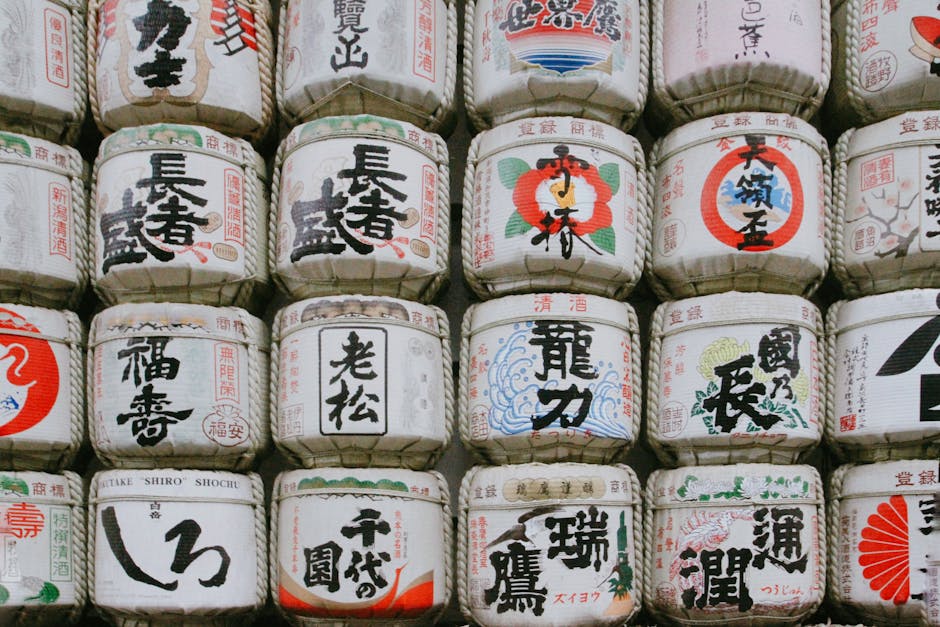 Photo by
 Calories and carbohydrates, which are often a health concern, also differ between the two.
Japanese sake is a brewed liquor that contains carbohydrates, so one ichigo (一合), which is 180ml, contains approximately 190 kcal and about 8g of carbohydrates. These carbohydrates, which are the essence of rice's umami, also contribute to the richness of its flavor.
Shochu is a carbohydrate-free liquor because carbohydrates are removed during the distillation process. While its calorie content varies with alcohol percentage, ranging from approximately 140 to 200 kcal per 100ml, it is often chosen by those on a low-carb diet.
Differences in Drinking Styles
 Photo by
 Traditional drinking styles also differ for Japanese sake and Shochu.
How to Drink Japanese Sake
A distinctive feature of Japanese sake is that it can be enjoyed at various temperatures, such as chilled (Reishu, 冷酒), room temperature (Jōon, 常温), or warmed (Kanzake, 燗酒). The traditional style involves drinking it from a Tokkuri (徳利) carafe and Choko (猪口) cups, which greatly enhances its compatibility with food. Even the same brand can offer a vastly different taste experience simply by changing its temperature.
How to Drink Shochu
Shochu is generally consumed diluted, such as on the rocks, with water, with hot water, or with soda, in addition to being drunk straight. For Honkaku Shochu, hot water is often preferred, while Imo Shochu is commonly enjoyed on the rocks or with water. The drinking style is chosen according to the brand and personal preference. Adding lemon or ume (Japanese plum) is also a popular variation.
How to Choose Between Japanese Sake and Shochu
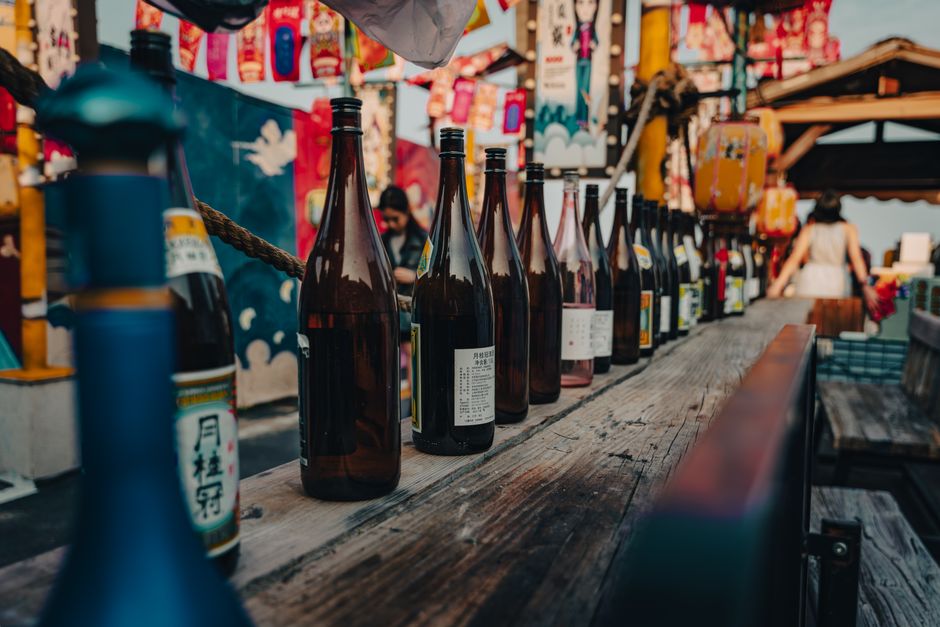 Photo by ZhiCheng Zhang on Pexels
You can enjoy the unique appeal of each even more by choosing according to the occasion and the food.
Japanese sake pairs well with sashimi, Japanese cuisine, and dishes with delicate flavors, making it recommended for those who want to savor their meal slowly. Reishu is perfect for hot summer days, while Kanzake is ideal for cold winter days, allowing you to experience the changing seasons through your drink.
Shochu is easy to pair with grilled fish, meat dishes, and richly flavored foods, and its appeal lies in being less tiring to drink over a long period. As it's carbohydrate-free and its calorie content can be easily adjusted, it's also a popular choice among health-conscious individuals.
Summary
 Photo by
 Japanese sake and Shochu are alcoholic beverages that differ in every aspect: production method, ingredients, alcohol content, calories, and drinking styles. Japanese sake is a brewed liquor made from rice, a delicate drink that offers the umami and rich flavors of rice. Shochu is a distilled liquor made from a wide variety of ingredients, appealing with its clear taste and carbohydrate-free, easy-to-drink nature.
By understanding their respective characteristics and choosing according to the occasion, the food, or your mood, you can further enjoy the world of traditional Japanese alcoholic beverages. Try both and discover your favorite drink.
Frequently Asked Questions
Q日本酒と焼酎の最も大きな違いは何ですか?
日本酒は米と麹と水を発酵させて造る「醸造酒」であり、米の旨味や香りが残ります。一方、焼酎は原料を発酵させた後に「蒸留」する「蒸留酒」で、アルコール分と香り成分のみを抽出し、糖質を含まないクリアな味わいが特徴です。
Q日本酒と焼酎のアルコール度数と一般的な飲み方を教えてください。
日本酒のアルコール度数は一般的に15%前後で、冷酒・常温・燗酒など温度を変えて料理と共に楽しむのが特徴です。焼酎は本格焼酎で25%が標準と高く、ロック・水割り・お湯割りなど割って飲むのが一般的です。
Q日本酒と焼酎のカロリーや糖質に違いはありますか?
日本酒は糖質を含む醸造酒のため、一合(180ml)で約190kcal、糖質約8gが含まれます。対して焼酎は蒸留の過程で糖質が除去されるため糖質ゼロで、カロリーは100mlあたり約140〜200kcalとアルコール度数によって異なります。
Q日本酒と焼酎はどのような原料から作られていますか?
日本酒は基本的に米・米麹・水のみを原料とします。一方、焼酎は芋・麦・米・黒糖・蕎麦など非常に幅広い原料が使われ、原料によって風味や香りが大きく変わるのが魅力です。


