Junmai Sake Explained: Definition, Characteristics, and How It Differs from Other Sake
You often see "Junmai" sake, but what exactly is it? Amidst diverse types, this article clarifies Junmai's definition, features, and how to choose.

よつば
May 2, 2026
Among Japanese sake, you often see the term "Junmai-shu (純米酒)", but do you know exactly what kind of sake it is? Japanese sake comes in various types, such as Daiginjo (大吟醸) and Honjozo (本醸造), each with differences in manufacturing methods and taste. This article will explain everything from the definition and characteristics of Junmai-shu to its differences from other sake and how to choose it.
Definition of Junmai-shu
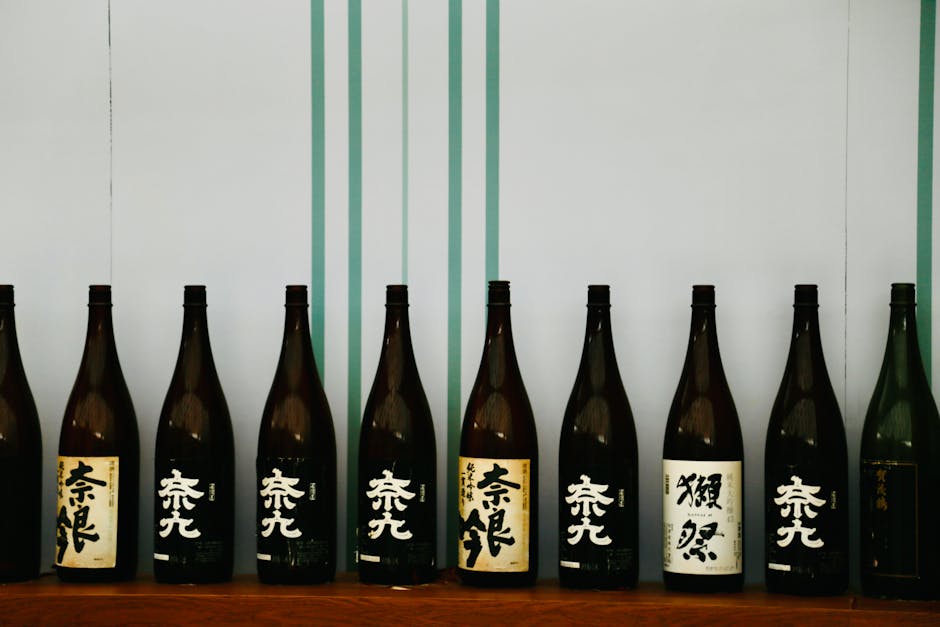 Photo by
 Junmai-shu refers to Japanese sake made only from rice, rice koji (米麹), and water. It is sake that maximizes the umami and aroma derived from rice, without any added brewer's alcohol (醸造アルコール).
Under the "Standards for Labeling Manufacturing Methods and Quality of Sake" set by the National Tax Agency, Junmai-shu is classified as one of the special designation sake (特定名称酒). Before the standards revision in 2004, there was a regulation that the rice polishing ratio (精米歩合) had to be 70% or less. However, currently, there is no regulation on the rice polishing ratio; Junmai-shu can be labeled as such if it meets conditions such as the ratio of rice and rice koji used, and a koji ratio of 15% or more.
The biggest characteristic of Junmai-shu is that you can directly enjoy the flavor of the rice itself. Compared to sake with added brewer's alcohol, it offers a richer umami and body from the rice, providing a mellow flavor.
Differences Between Junmai-shu and Other Sake
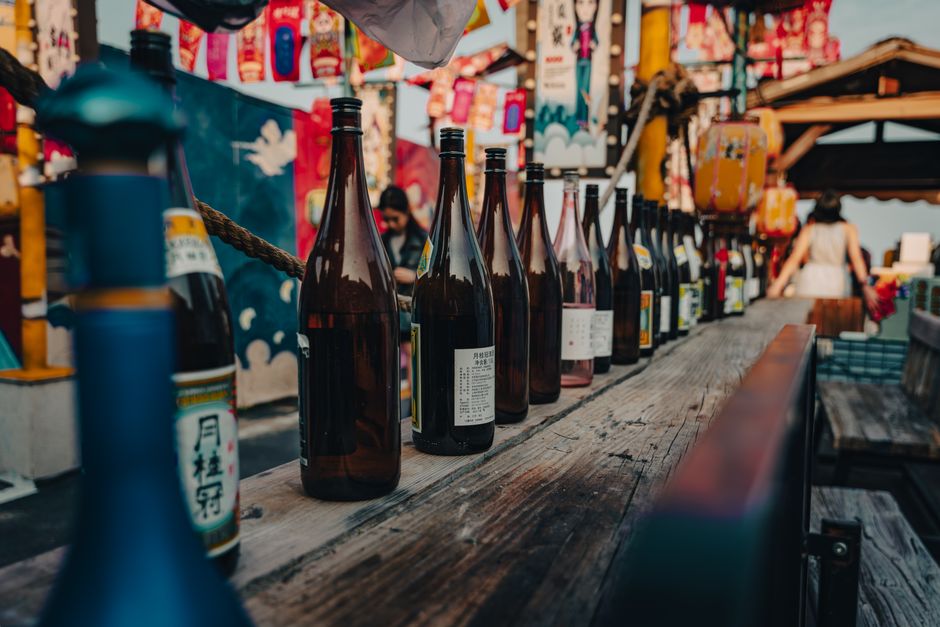 Photo by ZhiCheng Zhang on Pexels
Japanese sake is broadly divided into "special designation sake (特定名称酒)" and "ordinary sake (普通酒)". Special designation sake is further classified, including not only Junmai-shu but also Honjozo-shu and Ginjo-shu.
Presence or Absence of Added Brewer's Alcohol
The biggest difference between Junmai-shu and other sake is the presence or absence of added brewer's alcohol. Some Honjozo-shu and Ginjo-shu have brewer's alcohol added to enhance aroma or create a cleaner taste.
On the other hand, since Junmai-shu is made only from rice, rice koji, and water, it has a flavor where the natural sweetness and umami of the rice come to the forefront.
Differences by Rice Polishing Ratio
The rice polishing ratio (精米歩合) refers to the percentage of polished rice remaining after milling brown rice. For example, a rice polishing ratio of 60% means that 40% of the brown rice has been milled away, and the remaining 60% is used. The lower the rice polishing ratio, the more likely the sake is to have a clear taste free of impurities.
Among Junmai-shu, those with a rice polishing ratio of 60% or less are called Junmai Ginjo-shu (純米吟醸酒), and those with 50% or less are called Junmai Daiginjo-shu (純米大吟醸酒).
Types of Junmai-shu
 Photo by Matthew Jesús on Pexels
There are several types of Junmai-shu, differing in rice polishing ratio and brewing methods. Understanding the characteristics of each will make it easier to choose one that suits your preferences.
Junmai Ginjo-shu
Junmai Ginjo-shu is made from white rice with a rice polishing ratio of 60% or less, rice koji, and water, using the Ginjo brewing method (吟醸造り), which involves long-term fermentation at low temperatures. It is characterized by a fruity and elegant aroma and a clean finish.
Junmai Daiginjo-shu
Junmai Daiginjo-shu is the highest grade of Junmai-shu, made using rice with a rice polishing ratio of 50% or less and finished with an even more meticulous Ginjo brewing method. It offers a delicate and refined aroma and a smooth taste free of impurities.
Tokubetsu Junmai-shu (Special Junmai-shu)
Tokubetsu Junmai-shu is Junmai-shu made with a rice polishing ratio of 60% or less, or through special brewing methods. You can find unique bottles that reflect the specificこだわり (kodawari - a deep commitment or dedication to craftsmanship) of the sake brewery (蔵元).
How to Choose Junmai-shu
 Photo by Iban Lopez Luna on Pexels
To choose a Junmai-shu that suits your taste from the many available, it's good to keep a few points in mind.
Choose by Taste Profile
Sake flavors are expressed along four axes: "sweet (甘口) / dry (辛口)" and "light/clean (淡麗) / rich/full-bodied (濃醇)". Tanrei Karakuchi (淡麗辛口 - light and dry) is characterized by a crisp finish, while Nojun Amakuchi (濃醇甘口 - rich and sweet) offers abundant body and umami. Checking the Sake Meter Value (日本酒度) and acidity level (酸度) on the label will give you an idea of the taste tendency.
Choose by Region
Sake flavors vary depending on the region of production. Niigata Prefecture is known for its light and dry (Tanrei Karakuchi) sake, Nada in Hyogo Prefecture for its robust flavor, often called Otoko-zake (男酒 - "masculine" sake), and Fushimi in Kyoto for its soft, gentle Onna-zake (女酒 - "feminine" sake). Ordering local sake you encountered during your travels is also one way to enjoy it.
Choose by Serving Style
If you prefer chilled sake (冷酒), aromatic Junmai Ginjo is recommended. If you enjoy warm sake, Junmai-shu with a strong umami flavor is a good choice. The brewery may sometimes list recommended serving temperatures on the label, so it's a good idea to refer to them.
How to Enjoy Junmai-shu
 Photo by
 Junmai-shu is a sake whose taste changes significantly with temperature. Even the same brand can show completely different characteristics just by changing how it's served.
Chilled sake (冷酒) from the refrigerator offers a refreshing taste, pairing well with aperitifs and appetizers. At room temperature, known as Hiya (冷や), you can directly experience the umami of the rice. Nurukan (ぬる燗), served around 40 degrees Celsius (104°F), allows the aroma to rise, while Atsukan (熱燗), served around 50 degrees Celsius (122°F), highlights the sweetness and body.
Pairing with food is also one of the joys of Junmai-shu. Light (Tanrei) Junmai-shu pairs excellently with sashimi and white fish, while rich (Nojun) Junmai-shu is superb with simmered dishes and grilled foods. Find your favorite bottle and try different serving styles to match the season and cuisine.
Summary
 Photo by Markus Winkler on Pexels
Junmai-shu is sake made only from rice, rice koji, and water, and its greatest appeal is the ability to enjoy the inherent umami and rich flavor of the rice. There are various types, such as Junmai Ginjo, Junmai Daiginjo, and Tokubetsu Junmai-shu, differing in rice polishing ratio and brewing methods, each possessing a unique character.
By choosing with taste profile, region, and serving style in mind, you are sure to find a bottle that suits your preferences. We encourage you to explore the profound world of Junmai-shu by comparing different temperature ranges, from chilled (Reishu) to hot (Atsukan), and enjoying its pairings with various dishes.
Frequently Asked Questions
Q純米酒とは具体的にどのような日本酒ですか?
純米酒は、米・米麹・水のみを原料とし、醸造アルコールを一切添加せずに造られる日本酒です。米本来の旨味と香りを最大限に引き出し、ふくよかな味わいが特徴の特定名称酒です。2004年以降は精米歩合の規定はなく、米と米麹の使用割合などの条件を満たせば純米酒と表示できます。
Q純米酒と他の日本酒(本醸造酒など)との違いは何ですか?
純米酒と他の日本酒の最も大きな違いは、醸造アルコールの添加有無です。純米酒は米・米麹・水のみで造られ、醸造アルコールを一切使用しません。一方、本醸造酒や吟醸酒の一部には、香りや味わいを調整する目的で醸造アルコールが添加されています。
Q純米酒にはどのような種類がありますか?
純米酒には精米歩合や製法の違いにより、いくつかの種類があります。精米歩合60%以下の「純米吟醸酒」はフルーティーで華やか、50%以下の「純米大吟醸酒」は繊細で上品な味わいです。また、精米歩合60%以下または特別な製法で造られた「特別純米酒」も存在します。
Q純米酒はどのように選べば良いですか?
純米酒を選ぶ際は、まず「甘口・辛口」「淡麗・濃醇」といった味わいのタイプを考慮しましょう。日本酒度や酸度で傾向が分かります。また、新潟の淡麗辛口や京都伏見の柔らかい女酒など、産地による味わいの違いも参考になります。冷酒か燗酒か、飲み方に合わせて選ぶのもおすすめです。
Q純米酒の美味しい飲み方や料理との合わせ方を教えてください。
純米酒は温度で味わいが変化します。冷酒はすっきり、冷やは米の旨味、ぬる燗は香りが立ち、熱燗は甘味とコクが際立ちます。料理との相性も重要で、淡麗な純米酒は刺身や白身魚、濃醇な純米酒は煮物や焼き物と好相性です。様々な飲み方や組み合わせを試して楽しめます。


