Otoso: A Comprehensive Guide to Its Meaning, Origin, Preparation, and Proper Drinking Etiquette
Otoso: A New Year's sake tonic for health and longevity. This ancient family tradition holds deep meaning. Explore its history, significance, and making.

よつば
May 29, 2026
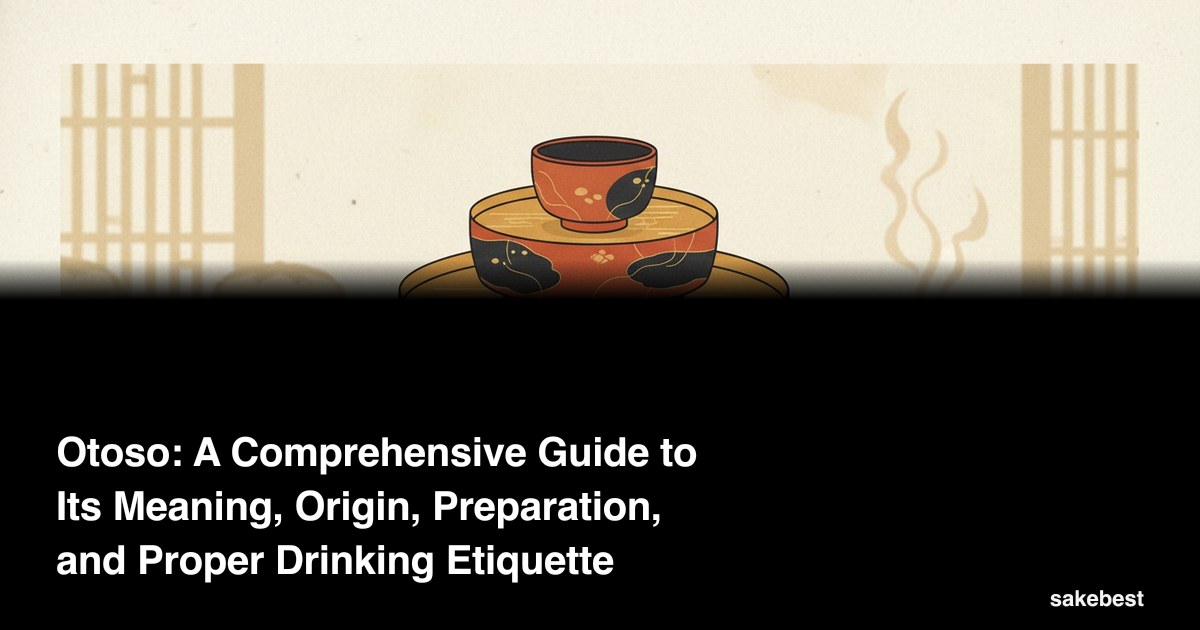
Otoso (お屠蘇) is a medicinal sake traditionally drunk during the New Year's holiday to pray for good health and longevity throughout the year. Its history is ancient, having been introduced to Japan from China and spreading from the imperial court to the common people. This article will delve into the profound meaning and origins of Otoso, easy ways to make it at home, and its traditional drinking methods and etiquette. Why not embrace the culture of Otoso to wish for your family's health and happiness at the start of the new year?
What is Otoso? Its Meaning and Wishes for the New Year
Otoso is a medicinal sake made by steeping "Tososan (屠蘇散)," a blend of several herbal medicines, in Japanese sake (日本酒) or mirin (みりん). It is an indispensable custom during the Japanese New Year, shared among family members on the morning of New Year's Day. This custom carries a deeper meaning and wishes beyond simply drinking alcohol.
The Meaning Represented by the Kanji for "Toso" The word "Toso" carries the meaning of "slaughtering (屠) and reviving (蘇)." Specifically, it embodies the wish to "slaughter evil spirits (邪気) and revive the soul (魂)." By drinking it, one is believed to ward off evil for the year and pray for good health, freedom from illness, and longevity. Since ancient times, it has been revered as a good luck charm to protect against sickness and misfortune.
Background of the New Year Drinking Custom The idea of purifying the mind and body and gaining new vitality at the start of a new year is seen in cultures across the world, both ancient and modern. Otoso is one such tradition, imbued with the earnest wish that the power of medicinal herbs will maintain health, allowing all family members to spend the year in good health. Especially during the special New Year period when families gather, sharing the same drink together also serves to deepen family bonds and share good health.
Otoso can be said to be more than just a luxury item; it is a cultural beverage that encapsulates traditional Japanese views on health and family.
The History of Otoso and Its Spread in China and Japan
The history of Otoso is extremely ancient, with its origins tracing back to China. Let's unravel its journey from its introduction to Japan to its establishment as a unique cultural practice.
Origins in China The prototype of Otoso is said to have been devised by the renowned physician Hua Tuo (華佗) during China's Three Kingdoms period (around the 3rd century). At that time, it was used as a medicinal sake to ward off illness during epidemics. Later, during the Tang Dynasty (7th to 10th centuries), the custom of drinking it during the New Year to pray for good health spread, primarily from the imperial court, and is believed to have permeated among the common people.
Introduction and Popularization in Japan Otoso was introduced to Japan during the early Heian period. It was adopted as one of the imperial court events during a time when Chinese culture was actively imported by Japanese envoys to Tang China (遣唐使). During the reign of Emperor Saga (early 9th century), it began to be drunk as "Gotoso" in the imperial court on New Year's Day, and this custom spread throughout aristocratic society.
During the Muromachi period, the custom of Otoso became established in samurai society, and by the Edo period, it had widely spread among the common people. Around this time, Tososan began to be sold at pharmacies and drugstores, making it easy for households to prepare Otoso. Thus, Otoso has been passed down to this day as an indispensable custom for the Japanese New Year. For more details on the history of Japanese sake culture, please also refer to The History of Japanese Sake | A Thorough Explanation of 2000 Years from Origins to the Present.
What is Tososan, the Main Ingredient of Otoso?
Essential for making Otoso is Tososan. This is a blend of several herbal medicines, serving as the source of Otoso's medicinal properties and unique flavor.
Definition of Tososan and its Herbal Ingredients Tososan is a product, typically available as a powder or in tea bag form, made from blended herbal medicines, commonly found at pharmacies, supermarkets, and online. While the specific blend may vary slightly by product, the following herbal medicines are frequently used:
- Sansho (山椒): Believed to aid digestion and warm the body. Characterized by its unique aroma.
- Nikkei (肉桂): Known as cinnamon, it is expected to warm the body, promote blood circulation, and have pain-relieving effects. It has a sweet and spicy aroma.
- Bofu (防風): Said to have diaphoretic and antipyretic effects, used for preventing and treating colds.
- Kikyo (桔梗): Has antitussive and expectorant properties, effective for throat discomfort.
- Byakujutsu (白朮): Helps regulate stomach and intestinal function and is believed to have diuretic effects.
- Choji (丁子): Known as clove, it is expected to warm the body, aid digestion, and have antibacterial properties. It has a distinct, strong aroma.
The medicinal properties of these herbal ingredients are thought to contribute to maintaining health throughout the year by drinking Otoso.
How to Obtain Tososan As the end of the year approaches, Tososan is sold at pharmacies, drugstores, and in the New Year's goods sections of supermarkets nationwide. It can also be easily purchased through online retailers. It is typically sold in multi-serving packs or tea bag form, making it simple to prepare by just steeping it in Japanese sake or mirin.
There are no specific rules for choosing Tososan, but it is advisable to select a product from a reputable manufacturer.
Easy at Home! How to Make Otoso
Otoso can be easily made at home if you have Tososan. Here, we will explain the basic preparation method and how to choose Japanese sake and mirin.
Ingredients
- Tososan: 1 packet (follow product instructions)
- Japanese sake: 300ml to 500ml (adjust according to preference and Tososan quantity)
- Hon-mirin (本みりん): 50ml to 100ml (if you prefer a sweeter taste; Japanese sake alone is also acceptable)
Instructions
- Steep the Tososan: Place Japanese sake and Hon-mirin into a clean container (such as a glass bottle or ceramic tokkuri) and steep the Tososan. If using a tea bag type, simply place it in; if using powder, put it in a tea strainer bag for easier removal later.
- Steeping Time: Refrigerate and steep for 2-3 hours to overnight (about 10 hours). Steeping times vary depending on the type of herbal medicine and product, so please follow the instructions on the Tososan package. Steeping for too long may result in a stronger bitterness or astringency.
- Remove the Tososan: Remove the Tososan before drinking. With this, your Otoso is complete.
Choosing Japanese Sake and Mirin
- Japanese Sake: The Japanese sake that forms the base of Otoso does not need to be particularly expensive. Futsushu (普通酒) or Honjozo-shu (本醸造酒) can make a perfectly delicious Otoso. While Ginjo-shu (吟醸酒) or Junmai-shu (純米酒) can also be used, the strong aroma of Tososan might overpower the delicate characteristics of finely scented Japanese sake. If you prefer a sweeter taste, choose a sweet Japanese sake; if you prefer a crisp flavor, a dry Japanese sake would be good. The alcohol content of general Japanese sake (around 15%) is fine. Please refer to List of Japanese Sake Types | A Complete Guide to All Types, from Tokutei Meisho-shu to Unique Varieties and What is Junmai-shu? | A Clear Explanation of Definition, Characteristics, and Differences from Other Japanese Sake to help you choose your preferred Japanese sake.
- Hon-mirin: If you wish to add sweetness, be sure to use "Hon-mirin." Unlike mirin-style seasonings, Hon-mirin is an authentic seasoning made from glutinous rice and contains alcohol. Its natural sweetness and richness will enhance the flavor of Otoso. Adding Hon-mirin makes it smoother on the palate and easier to drink.
Storage Method Once made, Otoso should be stored in the refrigerator and consumed as soon as possible. Because it contains steeped herbal medicines, its shelf life is shorter than that of regular Japanese sake. For more details on how to store Japanese sake, please also refer to How to Store Japanese Sake | Explaining Differences Before and After Opening, and Refrigerator Usage.
Proper Way to Drink Otoso and Its Etiquette
Otoso is not just for drinking; its meaning is deepened by sharing it according to traditional etiquette.
Timing and Order of Drinking
- Timing: Otoso is generally drunk by all family members on the morning of New Year's Day, before exchanging New Year's greetings. It is considered best to partake in it first thing in the morning to welcome the new year with a pure heart.
- Order of Drinking: In traditional etiquette, the sakazuki (盃) is passed from the youngest to the oldest. This signifies sharing the pure "ki" (energy) of the younger person with the elders, wishing them longevity. There is also a belief that by having the younger person first ward off evil spirits and transmit that purified energy to the elders, it prays for the health and prosperity of the entire family.
Using the Toso-ki and Sakazuki When partaking in Otoso, a specialized sake vessel called "Toso-ki (屠蘇器)" is used. A Toso-ki typically consists of the following components:
- Choshi (銚子): A handled vessel for holding Otoso.
- Three-tiered Sakazuki (盃): Three sake cups of different sizes—large, medium, and small. They can be used according to the number of family members, or one person may use all three cups in sequence.
- Sakazukidai (盃台): A stand for placing the sakazuki.
- Tosodai (屠蘇台): A tray on which the choshi and sakazukidai are placed.
Drinking Procedure
- Preparation: Arrange the choshi and the three-tiered sakazuki set on the sakazukidai on the tosodai.
- Pour: First, pour Otoso from the choshi into the smallest sakazuki.
- From Youngest: Starting with the youngest family member, each person takes the sakazuki and sips a small amount.
- Pass the Sakazuki: Before passing the sakazuki to the next person, lightly wipe it clean to purify it.
- All Together: Continue until all family members have passed the sakazuki.
Words Spoken While Drinking When partaking in Otoso, it is customary to recite phrases such as "If one person drinks this, the family will be free from illness; if a family drinks this, the entire village will be free from illness," wishing for good health and freedom from illness. This expresses the medicinal efficacy of Otoso and the widespread reach of its blessings.
Choosing and Storing Japanese Sake for Otoso
The Japanese sake that forms the base of Otoso is a crucial element that influences its taste and aroma. Let's look at what kind of Japanese sake to choose and how to store the prepared Otoso.
Types and Characteristics of Base Japanese Sake
- Futsushu and Honjozo-shu: These are the most common and readily available, suitable for making Otoso as their flavors do not interfere with Tososan's aroma. They are also affordable and regularly consumed Japanese sakes.
- Junmai-shu: Characterized by the natural umami and richness of rice, it harmonizes with the herbal flavor of Tososan, resulting in a deep taste. Recommended for those who want to fully appreciate the umami of rice. You can find more details in What is Junmai-shu? | A Clear Explanation of Definition, Characteristics, and Differences from Other Japanese Sake.
- Ginjo-shu and Daiginjo-shu (大吟醸酒): Known for their elegant aromas, there is a possibility that their delicate scents might clash with the strong aroma of Tososan. If you wish to enjoy the subtle ginjo aroma, adjustments such as shortening the Tososan steeping time may be necessary. Please also refer to What is Ginjo-shu? | Explaining Definition, Differences from Daiginjo, and How to Enjoy Ginjo Aroma.
Choosing Sweet or Dry and Compatibility with Tososan
- Sweet Japanese Sake: If adding Hon-mirin, choosing a sweet Japanese sake will result in a generally mellow and easy-to-drink Otoso. This is also recommended for those who dislike the bitterness or herbal taste of Tososan.
- Dry Japanese Sake: If you prefer a crisp taste, choose a dry Japanese sake. This will highlight the herbal notes of Tososan, allowing you to enjoy a more medicinal sake-like flavor. It is also possible to adjust the amount of Hon-mirin to keep the sweetness subtle.
Alcohol Content and Taste The alcohol content of general Japanese sake is around 15%, but steeping Tososan may cause a slight change in the alcohol percentage. For more details on the alcohol content of Japanese sake, please refer to What is the Alcohol Content of Japanese Sake? Comparing Alcohol Percentages by Type and with Other Alcoholic Beverages. Since Otoso has a strong connotation as a medicinal sake, it is best to choose Japanese sake based on your preferred taste rather than overly worrying about the alcohol content.
Storing Prepared Otoso Otoso prepared by steeping Tososan requires more careful storage than regular Japanese sake due to the herbal ingredients it contains.
- Refrigerated Storage: Once completed, store the Otoso in a clean, airtight container and always keep it in the refrigerator.
- Best Before Date: Generally, it is recommended to consume it within approximately 1 to 10 days after preparation. Since the herbal ingredients may change in flavor and efficacy over time, consume it as early as possible.
- Signs of Deterioration: If the color changes significantly or an unusual odor is detected, avoid consumption. For more details on the best before date of Japanese sake, please also refer to Japanese Sake Best Before Date | No Display Obligation, Storage Methods, and Optimal Drinking Period Explained.
Frequently Asked Questions About Otoso Q&A
Here are common questions about Otoso and their answers.
Q1: Can children drink Otoso? A: Otoso is based on Japanese sake and mirin, so it contains alcohol. Therefore, children, individuals sensitive to alcohol, or those planning to drive should not drink it. For children, it is recommended to prepare non-alcoholic amazake (甘酒) or non-alcoholic drinks that mimic the aroma of Otoso (e.g., tea steeped with Tososan) so they can enjoy the New Year's atmosphere together.
Q2: If Tososan is unavailable, can I use a substitute? A: Even if Tososan is not available, the sentiment of wishing for good health and freedom from illness during the New Year is important.
- Japanese Sake Only: Japanese sake alone can be drunk as "Omiki (お神酒)," allowing you to celebrate the New Year with a pure heart.
- Medicinal Sake Substitute: While there is no specific herbal medicine that can directly substitute Tososan, drinking other herbal liqueurs (such as homemade plum wine) can also express wishes for good health.
- Commercial Amazake: Non-alcoholic amazake is also a popular auspicious drink consumed during the New Year to wish for good health.
Q3: How long can I drink prepared Otoso? A: As mentioned earlier, prepared Otoso should be stored in the refrigerator and ideally consumed within approximately 1 to 10 days. The herbal ingredients may change in flavor and efficacy over time, and the quality may deteriorate. It is important to note that its storage method differs from that of general seishu (清酒). For basic information on seishu, you can refer to What is Seishu? | A Clear Explanation of the Difference from Japanese Sake, Definition, and History.
Q4: Are there other alcoholic beverages drunk during the New Year besides Otoso? A: Besides Otoso, several other alcoholic beverages are consumed during the New Year.
- Omiki: This refers to Japanese sake offered to the gods at a household altar (kamidana) and then consumed as an offering from the gods. It is drunk to pray for good health and a bountiful harvest.
- Iwai-zake (祝い酒): This term generally refers to alcoholic beverages drunk at celebratory occasions like weddings or housewarmings, but during the New Year, Japanese sake may also be shared to wish for family health and happiness.
- Amazake: Non-alcoholic amazake is a popular New Year's drink enjoyed by both children and adults. It is also highly nutritious and expected to have a warming effect on the body.
These drinks, like Otoso, are also part of Japan's traditional culture of wishing for health and happiness at the start of a new year.
Summary
Otoso is a traditional Japanese medicinal sake consumed during the New Year to pray for good health and longevity. Introduced from China and adopted as an imperial court event during the Heian period, it widely spread among the common people by the Edo period and has been passed down to this day.
This article has provided a detailed explanation of the profound meaning and origins of Otoso, the role of Tososan as its main ingredient, easy ways to make it at home, and the traditional drinking methods and etiquette, such as passing the sakazuki from the youngest to the oldest.
The custom of Otoso, wishing for family health and happiness at the start of a new year, holds significant meaning even in modern times. We hope you will use this article as a reference to make Otoso at home and experience Japan's rich New Year's culture.