The Ultimate Guide to Ochoko vs. Guinomi: How to Choose and Use Sake Cups
To truly savor sake, you need the right vessel. While "ochoko" and "guinomi" may seem similar, they differ in origin, design, and how they enhance sake's flavor.

よつば
May 30, 2026
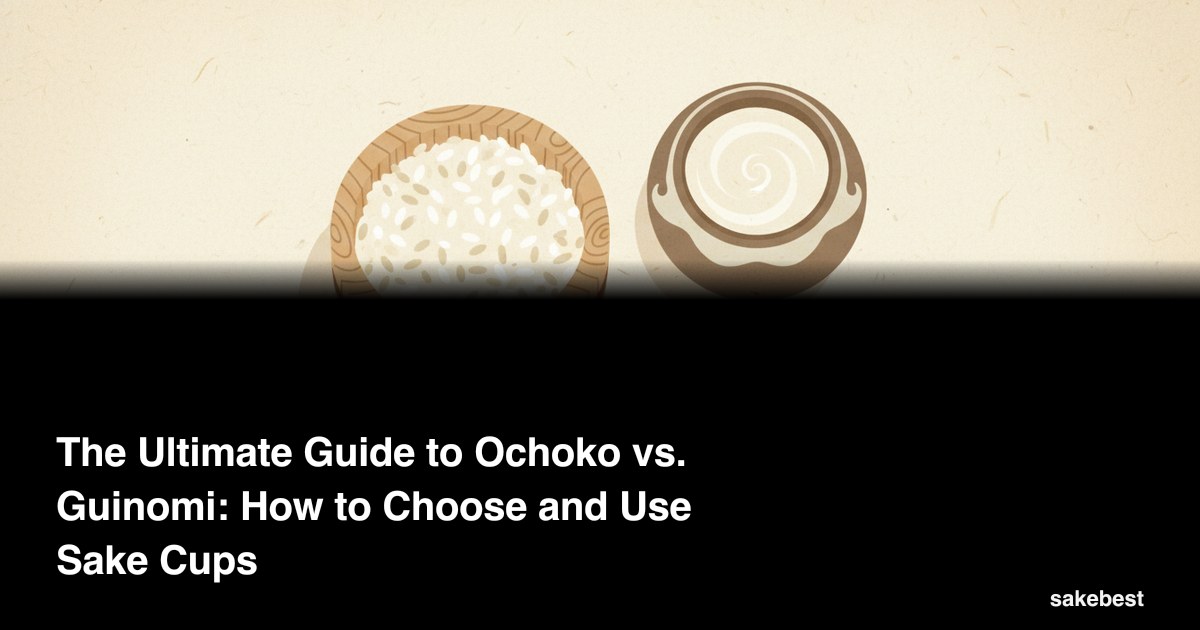
To truly savor Japanese sake, understanding the essential sake vessels (酒器) is key, particularly the ochoko (おちょこ) and guinomi (ぐい呑み). While they may appear similar at first glance, there are distinct differences in their origins, characteristics, suitable sake types, and how they are used. This article thoroughly explores the profound world of Japanese sake vessels, from the history of ochoko and guinomi to how their materials and shapes influence the taste of sake, and even how to choose and care for them.
What is an Ochoko? Its History and Diverse Appeal
An ochoko is a general term for the small sake vessels used for drinking Japanese sake. Its etymology is said to derive from "choku (ちょく)" or "choko (猪口)," terms used during the Edo period to mean "something small" or "insignificant." Originally, they were not limited to sake vessels but were also used as small dishes for soy sauce or vinegar, or even as dessert bowls. Today, they are widely recognized as vessels specifically for drinking Japanese sake.
The greatest appeal of the ochoko lies in its diversity and delicacy. Its capacity is generally small, around 30ml to 60ml, characterized by a size that can be finished in a single sip. This allows you to savor sake slowly, in small quantities, while minimizing temperature changes.
The materials also vary widely. While ceramics are the most common, ochoko made from various materials such as glass, tin (錫), copper, lacquerware (漆器), and wood exist. Each material affects the mouthfeel, heat retention, and how the aroma develops, playing a role in bringing out the unique characteristics of Japanese sake. For example, a pottery (陶器) ochoko has an earthy warmth and tends to offer a mellow mouthfeel. In contrast, porcelain (磁器) is often made thin, providing a crisp mouthfeel that doesn't interfere with the delicate aroma of sake.
Shapes also vary. An ochoko called "Janome (蛇の目)," which has a blue double-ring pattern at the bottom, is a traditional shape used for sake tasting to check the sake's color, clarity, and turbidity. Other shapes include the "bud-shaped" type, which easily traps aroma, and the "trumpet-shaped" type, which allows aroma to spread easily. A single shape can significantly change how the flavor of sake is perceived.
The ochoko can truly be called a profound sake vessel that maximizes the delicate flavors of Japanese sake and stimulates the senses of the drinker.
What is a Guinomi? Clearly Distinguishing it from Ochoko
A guinomi is also a sake vessel for drinking Japanese sake, but compared to an ochoko, it is characterized by a more substantial presence and larger capacity. It is widely believed to be named after the hearty way of drinking, "gui-tto nomu" (to gulp down), and tends to be created with more freedom in design than ochoko.
The most distinct difference between an ochoko and a guinomi lies in their size and capacity. Guinomi generally have a capacity of about 60ml to 180ml, making them two to three times larger than ochoko. This means there's no need to refill as frequently as with an ochoko, allowing you to enjoy sake at a leisurely pace.
Furthermore, many guinomi are shaped to be cupped in the hand, offering a pleasing feel that fits snugly in the palm. Many are crafted by ceramic artists, and each guinomi, with its unique character, holds value not only as a sake vessel but also as a piece of art or craft. While ceramics remain the mainstream material, glass and metal guinomi are also popular.
To summarize the differences between ochoko and guinomi, they are as follows:
| Item | Ochoko | Guinomi |
|---|---|---|
| Capacity | Approx. 30ml-60ml (one-sip size) | Approx. 60ml-180ml (slightly larger) |
| Shape | Delicate and diverse; some are functional, e.g., for sake tasting | Often substantial, fitting comfortably in the hand |
| Purpose | To enjoy delicate aromas and flavors in small sips | To leisurely savor the rich flavors of sake |
| Atmosphere | Modest, elegant, traditional | Substantial, individualistic, artistic |
| Etymology | "Choku (something small)" | "Gui-tto nomu (to gulp down)" |
A guinomi can be said to be the ideal sake vessel when you want to fully appreciate the rich flavors of sake or enjoy a leisurely evening drink with your favorite cup.
Ochoko or Guinomi: Which to Choose? Usage by Scene
The choice between an ochoko and a guinomi largely depends on the type of sake you're drinking, the occasion, and personal preference. By understanding their respective characteristics and using them appropriately, your enjoyment of sake can expand significantly.
Sake Types and Vessel Compatibility
There are various types of Japanese sake, each with distinct characteristics. The choice of sake vessel alone can either enhance or detract from the sake's individuality.
- Ginjo-shu (吟醸酒) and Daiginjo-shu (大吟醸酒): For these sake types, characterized by their elegant "ginjo aroma (吟醸香)," a bud-shaped ochoko or a wine glass is recommended, as they trap the aroma while allowing it to spread at the mouth. Choosing a shape that prevents aroma from escaping allows you to fully appreciate the delicate fragrance. Please also refer to What is Ginjo-shu? Definition, Differences from Daiginjo, and How to Enjoy Ginjo Aroma.
- Junmai-shu (純米酒) and Honjozo-shu (本醸造酒): For these sake types, where the umami and richness of rice are clearly felt, a pottery guinomi, which offers a mellow mouthfeel, or a straight-shaped ochoko, which allows you to directly feel the umami of sake, is suitable. If you want to savor the rice flavor slowly, drinking from a slightly larger guinomi is also a good option. See also What is Junmai-shu? Definition, Characteristics, and Differences from Other Sake Explained.
- Namazake (生酒) and Nigorizake (にごり酒): For Namazake, known for its fresh flavor, and Nigorizake, with its refreshing feel, a transparent and visually cool glass ochoko or guinomi is recommended. Especially when served chilled, the coolness of the glass further enhances the refreshing sensation.
- Kanzake (燗酒): For Kanzake, which is enjoyed warm, a thick pottery ochoko or guinomi with high heat retention is ideal. As the temperature slowly drops, you can enjoy the mellow umami and changing aromas of the sake.
Usage by Scene
- Everyday Evening Drink: It's recommended to choose a guinomi with a design and texture you like and enjoy sake at a leisurely pace. Its larger capacity also saves the trouble of frequent refills.
- When Hosting Guests / Hospitality: When drinking with multiple people, using different ochoko tailored to each sake type can be a stylish touch. Additionally, visually appealing glass or porcelain ochoko can beautifully adorn the dining table.
- Sake Tasting / Tasting: A "Janome" ochoko, which allows you to check the sake's color and clarity, or a bud-shaped ochoko, which helps concentrate the aroma, is suitable.
- Special Occasions / Gifts: Artist-made or traditional craft ochoko and guinomi not only enhance the dining table on special days but also make delightful gifts for sake enthusiasts.
The enjoyment of Japanese sake can change dramatically with just one sake vessel. Try combining various types of sake with different vessels to find your perfect match. Refer to Complete Guide to Drinking Sake | Thorough Explanation of Temperature, Vessels, and Food Pairings to experience the profound world of Japanese sake.
Enjoy Sake More! The Influence of Sake Vessel Materials and Shapes
When choosing an ochoko or guinomi, the material and shape have a surprisingly significant impact on the taste of sake. By understanding their respective characteristics, you can maximize the appeal of Japanese sake.
Influence of Materials
- Pottery (陶器):
- Characteristics: Rough texture, thick, and warm feel.
- Impact on taste: Creates a mellow mouthfeel, rounds out the sharp edges of sake, giving a gentler impression. It has high heat retention, making it suitable for Kanzake. The earthy aroma can also add depth to the sake.
- Porcelain (磁器):
- Characteristics: Smooth texture, often made thin.
- Impact on taste: Provides a very smooth mouthfeel, directly conveying the sake's original delicate aroma and flavor. Ideal for chilled sake or Ginjo-shu, where you want to enjoy a clear flavor.
- Glass:
- Characteristics: Transparent and refreshing feel.
- Impact on taste: Allows you to visually enjoy the sake's color and clarity. The mouthfeel is sharp, emphasizing a crisp taste. It pairs exceptionally well with chilled sake and sparkling sake.
- Tin (錫):
- Characteristics: A soft metal with high thermal conductivity.
- Impact on taste: Tin ions are said to remove impurities from sake, making the mouthfeel smoother. When chilled sake is poured, the entire vessel quickly cools down and maintains its coolness, allowing for a refreshingly cool mouthfeel.
- Metal (Copper, Titanium, etc.):
- Characteristics: Copper has high thermal conductivity, titanium is lightweight and allergy-free.
- Impact on taste: Copper quickly transmits coldness, allowing you to enjoy sake that is perfectly chilled. Titanium is tasteless and odorless, preserving the sake's flavor, and its lightness and durability make it suitable for outdoor use.
- Wood (including Lacquerware):
- Characteristics: Lightweight, soft mouthfeel, woody aroma.
- Impact on taste: The woody aroma adds a unique flavor to sake, and the warm mouthfeel is distinctive. Lacquerware also offers high heat retention and a sense of luxury.
Influence of Shapes
- Straight-shaped:
- Characteristics: Straight rim, same width from bottom to rim.
- Impact on taste: Sake flows directly to the back of the tongue, allowing you to strongly feel the umami and richness of the rice. Suitable for crisp, dry sake.
- Trumpet-shaped (wide-mouthed):
- Characteristics: Wide-open rim.
- Impact on taste: Aroma spreads easily, allowing you to fully enjoy elegant aromas like ginjo aroma. When sipped, sake spreads easily across the entire tongue, making it easier to perceive complex flavors.
- Bud-shaped (narrowing):
- Characteristics: Rim slightly narrows inward.
- Impact on taste: Traps aroma within the vessel, allowing a concentrated aroma to rise at the moment of drinking. Effective for enhancing the aroma of delicate sake or sake with subtle fragrances.
- Hirahai (平盃):
- Characteristics: Shallow with a wide-open rim.
- Impact on taste: Sake has a large surface area exposed to air, causing the aroma to rise quickly. When sipped, sake spreads across the entire tongue, resulting in a mellow mouthfeel. Also used for ceremonial purposes.
By understanding the characteristics of these materials and shapes and choosing a sake vessel to match your mood or the sake you're drinking, you can discover new facets of Japanese sake and have a richer experience. Recommended Sake Glasses | How to Choose, Popular Brands, and Types of Sake Vessels Explained introduces an even wider range of sake vessels.
Beyond Ochoko and Guinomi! Diverse Sake Vessels for Japanese Sake
The vessels for drinking Japanese sake are not limited to ochoko and guinomi. There is a diverse range of sake vessels cultivated over a long history, each with its unique charm and purpose.
Sakazuki (盃)
A sakazuki (盃) is a sake vessel characterized by its even shallower and flatter shape than an ochoko. It is a traditional vessel that has been used since ancient times for Shinto rituals, ceremonies, and celebrations, and can still be seen today at weddings or with Otoso (おとそ), a spiced sake for New Year's. Sakazuki include "Kodai-sakazuki (高台盃)," which have a foot called kodai (高台), and "Hirahai (平盃)," which are flat without a foot. Hirahai are characterized by sake spreading easily across the entire tongue when sipped, and the aroma rising all at once. There is also the pleasure of enjoying the design painted on the bottom of the vessel after drinking.
Masu (升)
A masu (升) was originally a container for measuring grains or liquids, but since the Edo period, it has also been used as a sake vessel for Japanese sake. Particularly, wooden masu allow the woody aroma to transfer to the sake, offering a unique flavor. Ways to drink sake from a masu include "Mori-shio (盛り塩)," where salt is piled on the rim of the masu and licked while drinking sake, or "Mokkiri (もっきり)," where a glass is placed inside the masu and sake is poured until it overflows from the glass into the masu. Masu are often used at festivals or celebratory occasions to enjoy sake in a hearty manner.
Katakuchi (片口)
A katakuchi (片口) is a vessel with a spout, used for transferring sake from a tokkuri (徳利) and then pouring it into an ochoko or guinomi. It has a wider opening than a tokkuri, which helps the sake's aroma to develop. Some people also use the katakuchi itself as a sake vessel, drinking sake directly from it. Beautiful katakuchi, especially those made by artists, are popular as decorative pieces for the dining table.
Tokkuri (徳利)
A tokkuri is a container for warming or serving Japanese sake at the table. It is characterized by a slender neck and a rounded body, designed to be easily placed in a hot water bath for warming sake. Tokkuri capacities vary, but ichigo (一合) (approx. 180ml) and nigo (二合) (approx. 360ml) are common. They are often used in sets with ochoko or guinomi, and the act of pouring sake itself becomes part of the enjoyment.
Wine Glasses
In recent years, wine glasses have gained attention as sake vessels for Japanese sake. Particularly, sake with elegant aromas, such as Ginjo-shu or Daiginjo-shu, can have their fragrances maximized when drunk from a wine glass. Wine glasses have a large bowl and a narrowing rim, which traps the aroma within the vessel, allowing it to waft into the nasal cavity at the moment of drinking. Furthermore, being made of transparent glass, they allow for visual enjoyment of the sake's color and clarity. As detailed in Recommended Sake Glasses, there is also a growing number of glasses specifically developed for certain types of sake, proposing diverse ways to enjoy Japanese sake.
Each of these sake vessels possesses distinct charms and functions. By choosing and using them according to the type of sake, the drinking occasion, and personal preference, you can further expand your experience of the profound world of Japanese sake.
Care and Storage of Ochoko and Guinomi
To cherish your favorite sake vessels for a long time, proper care and storage are essential. Since precautions vary by material, understand each characteristic and handle them with care.
Care Methods by Material
- Pottery:
- Washing: After use, rinse immediately with lukewarm water and gently wash with a neutral detergent and a soft sponge. Pottery is highly absorbent, so prolonged soaking in water can lead to mold or odors.
- Precautions: There may be tiny, invisible cracks (kannyu (貫入)) where the sake's color or aroma can linger. Be sure to wash thoroughly, especially after drinking dark-colored sake. It's wise to avoid using a dishwasher, as it can cause damage or excessive water absorption.
- Storage: After drying completely, store in a well-ventilated area. Be careful to prevent moisture buildup.
- Porcelain:
- Washing: Similar to pottery, gently wash with a neutral detergent and a soft sponge. It's a relatively easy material to handle due to its low absorbency.
- Precautions: Thin porcelain is fragile, so handle with care. While some are dishwasher-safe, handwashing is recommended to prevent damage from contact with other dishes.
- Storage: After drying, if stacking, place a cloth or similar material between them to prevent scratches.
- Glass:
- Washing: Wash with a neutral detergent and a soft sponge, then rinse thoroughly to prevent water spots.
- Precautions: Avoid sudden temperature changes; do not pour hot water or immerse a hot glass in cold water, as this can cause breakage. Thin glasses are particularly fragile, so handle gently. Many are dishwasher-safe, but handwashing generally prolongs their life.
- Storage: To prevent breakage, store individually or in a partitioned area to avoid bumping into other dishes.
- Tin (錫):
- Washing: Gently wash with a neutral detergent and a soft sponge. Do not use metal scrubbers or abrasive cleaners, as they can scratch the surface.
- Precautions: Tin is a very soft metal, so dropping or bumping it can cause dents or deformation. Dishwashers, microwaves, and ovens are strictly prohibited.
- Storage: To prevent scratches, wrap in a soft cloth or store in an individual box.
- Wood (including Lacquerware):
- Washing: Gently handwash with lukewarm water and wipe dry with a soft cloth. If using detergent, a specialized lacquerware cleaner is recommended.
- Precautions: Prolonged soaking in water, direct sunlight exposure, or using a dryer can cause cracks, deformation, or peeling of the lacquer.
- Storage: Store in a low-humidity area away from direct sunlight. It's also important to maintain adequate humidity, as excessive dryness is not good.
General Tips for Long-lasting Enjoyment
- Wash immediately after use: Leaving sake residue on the vessel can cause stains and odors.
- Dry completely: Storing while still damp can lead to mold growth and odors.
- Avoid direct sunlight, high temperatures, and humidity: These can cause discoloration and deterioration.
- Handle with care: Especially thin or artist-made items are fragile and should be handled gently.
By committing to proper care and storage, your favorite sake vessels will enrich your sake life for many years to come.
Conclusion
The ochoko and guinomi are essential and representative sake vessels for enjoying Japanese sake. The ochoko is a vessel for savoring delicate aromas and flavors in small sips, while the guinomi is for leisurely appreciating the rich flavors of sake; each possesses distinct charms and roles.
This article explained the origins, definitions, and specific differences between ochoko and guinomi. Furthermore, it delved deeply into how to choose them according to sake type and drinking occasion, and the impact that materials like pottery, porcelain, glass, and tin, as well as shapes like straight, trumpet-shaped, and bud-shaped, have on the taste of sake.
Beyond ochoko and guinomi, there is a wide variety of sake vessels, including sakazuki, masu, katakuchi, tokkuri, and even wine glasses. By understanding the characteristics of each vessel and using them according to your mood or the type of sake, you can further enhance your enjoyment of the profound world of Japanese sake.
By finding your favorite sake vessels and committing to proper care and storage, your sake life will become even richer. We hope you use this article as a guide to pursue your ultimate Japanese sake experience.


